What It Costs
We can't quote a number here without seeing the door, and we're not going to pretend otherwise
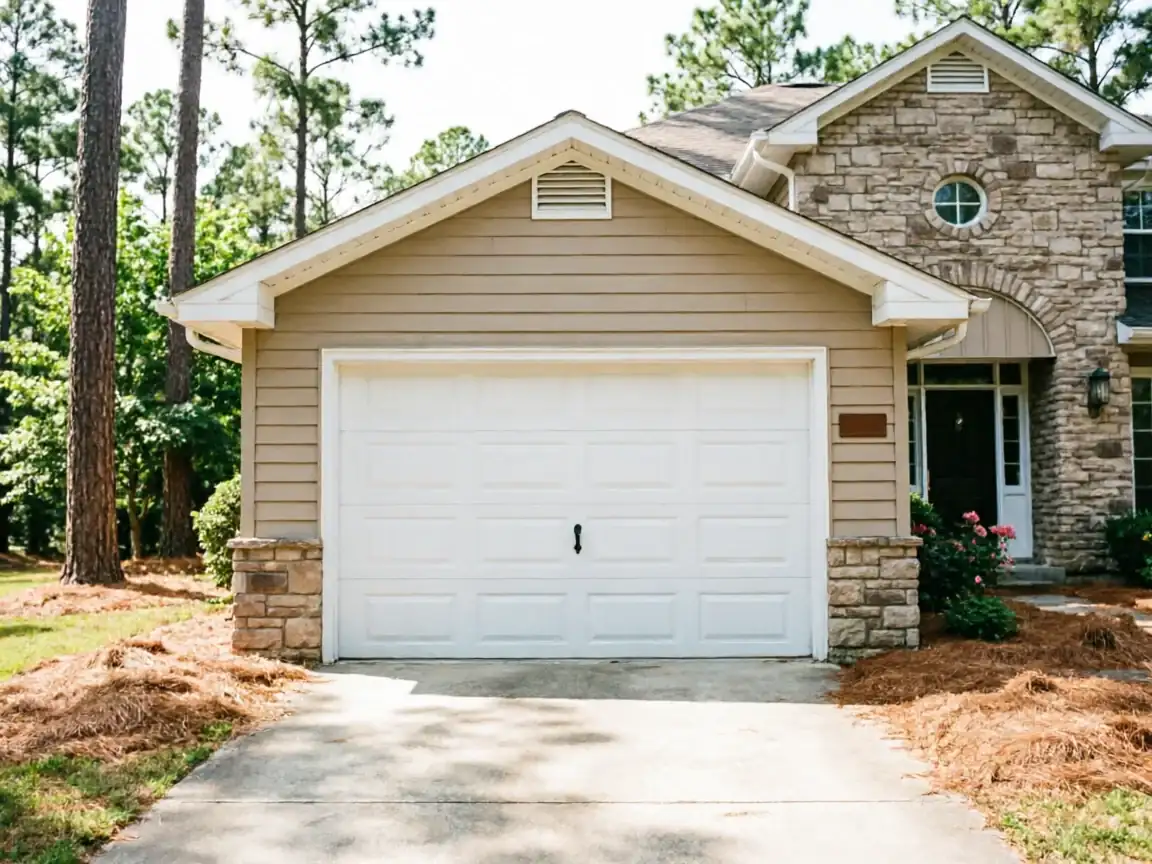
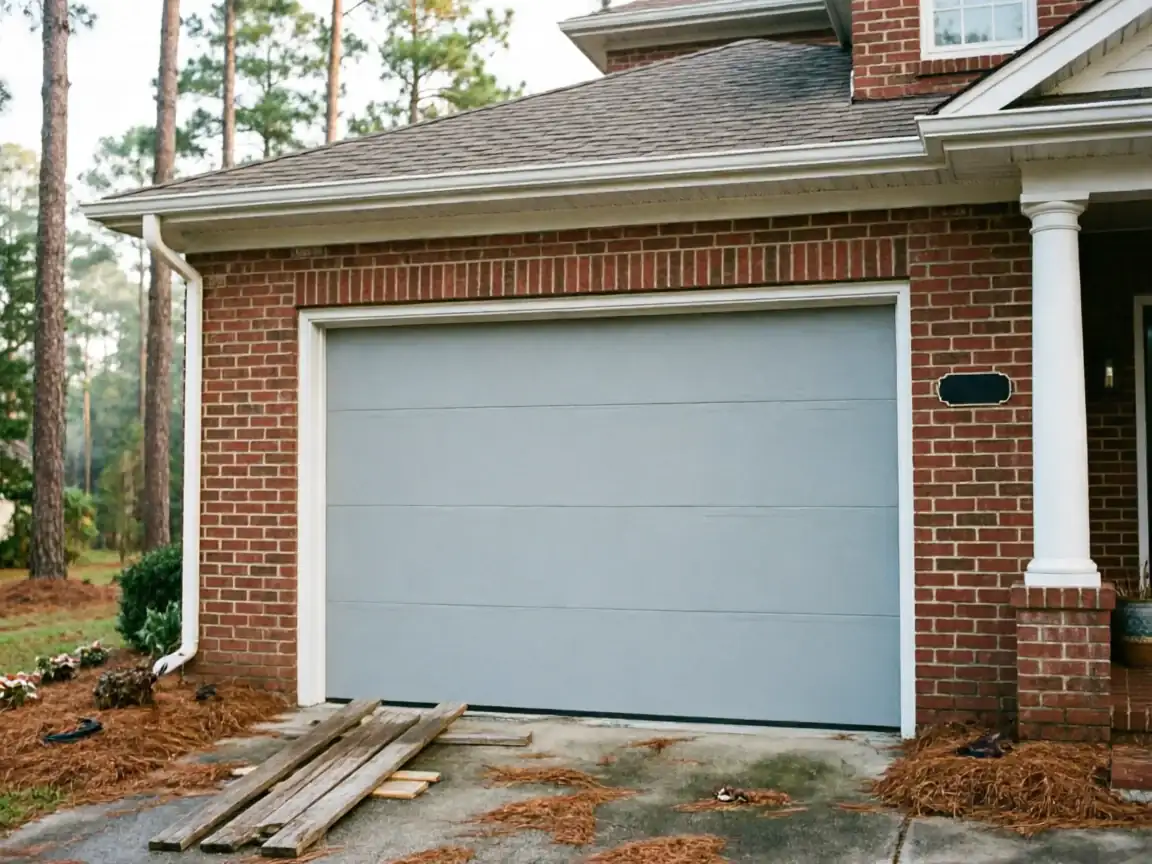
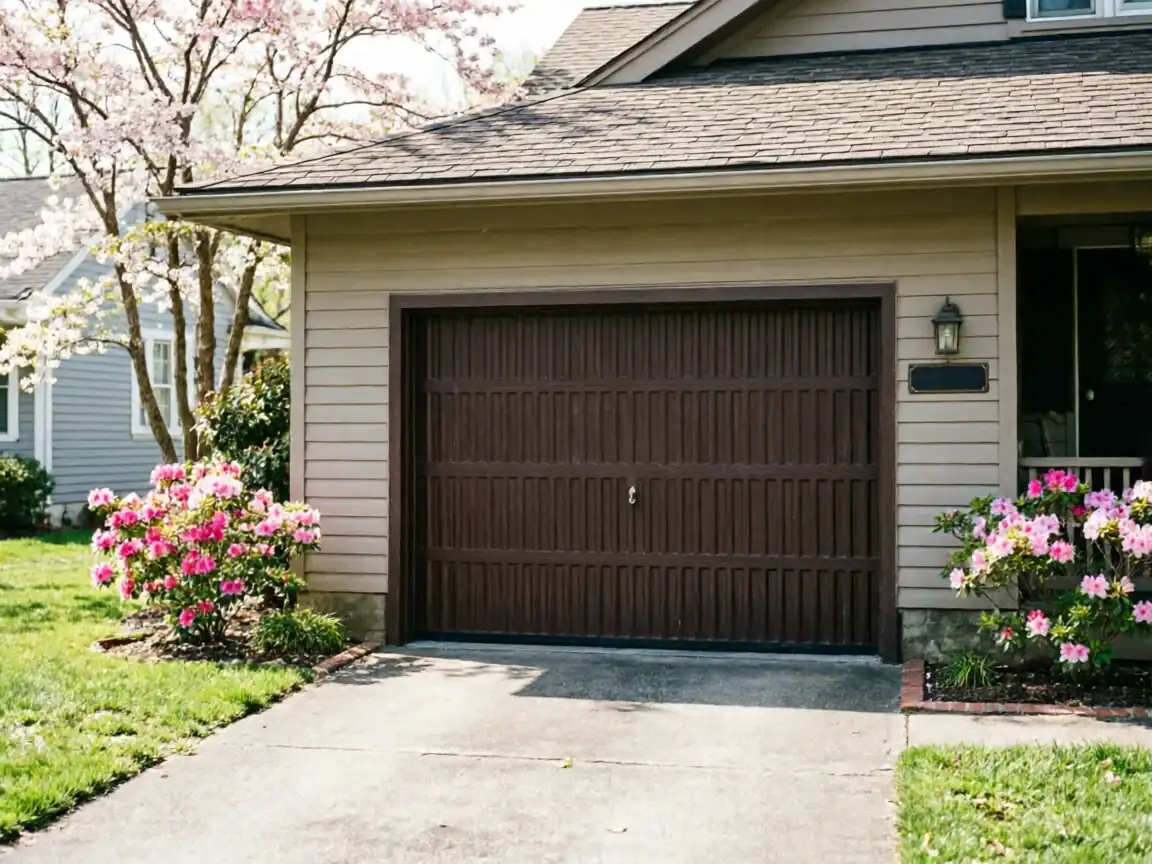
What drives the price on a Montgomery job is almost always the same thing: door weight and rail length. Most houses in this part of the service area went up in the 1980s, which means single or double steel sectional doors on a standard 16x7 or 9x7 frame - not custom sizes, not heavy insulated glass panels. That keeps the horsepower requirement modest for most jobs. What adds cost is what's hiding behind the door: a worn torsion spring that needs replacing alongside the opener, a header bracket that's rusted past reuse, or wiring that was never run for a wall control in the first place. We price the opener and the labor separately from anything the inspection turns up, and we tell you before we touch it, not after.
If your house falls outside that 1980s-90s band
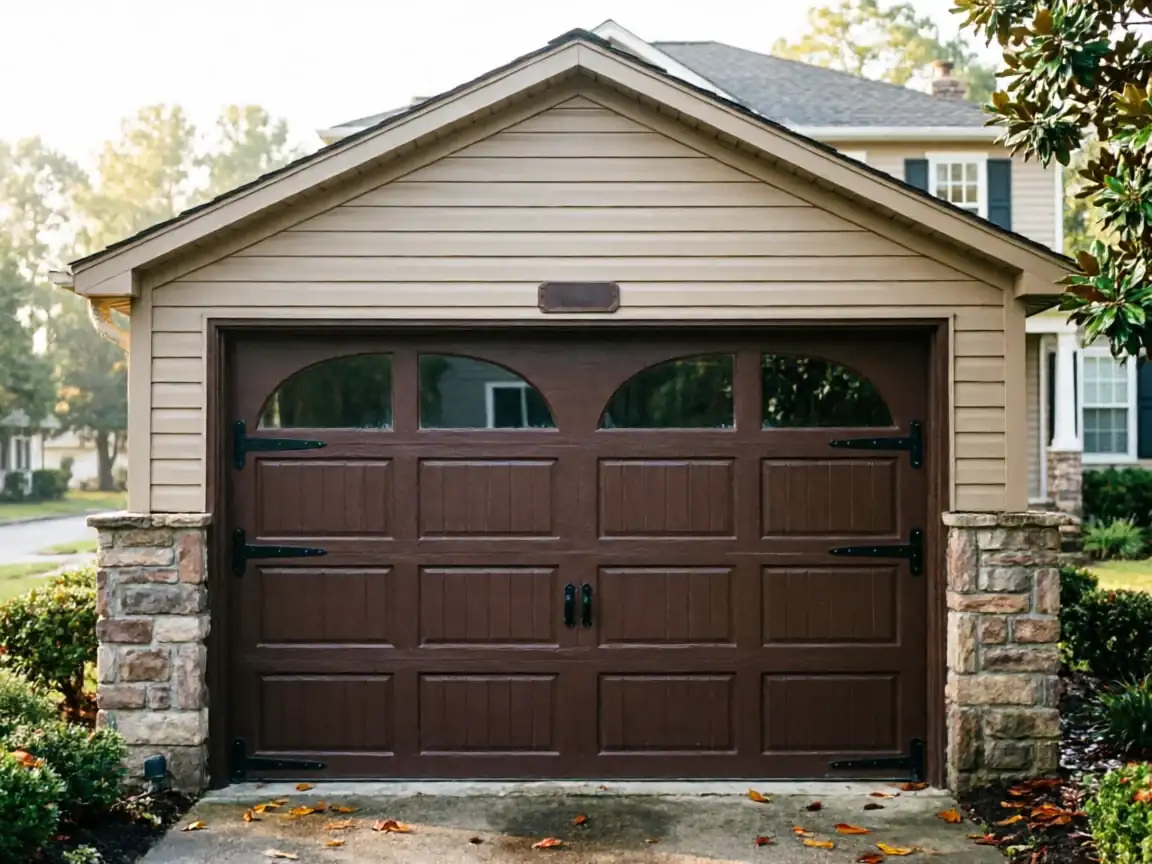
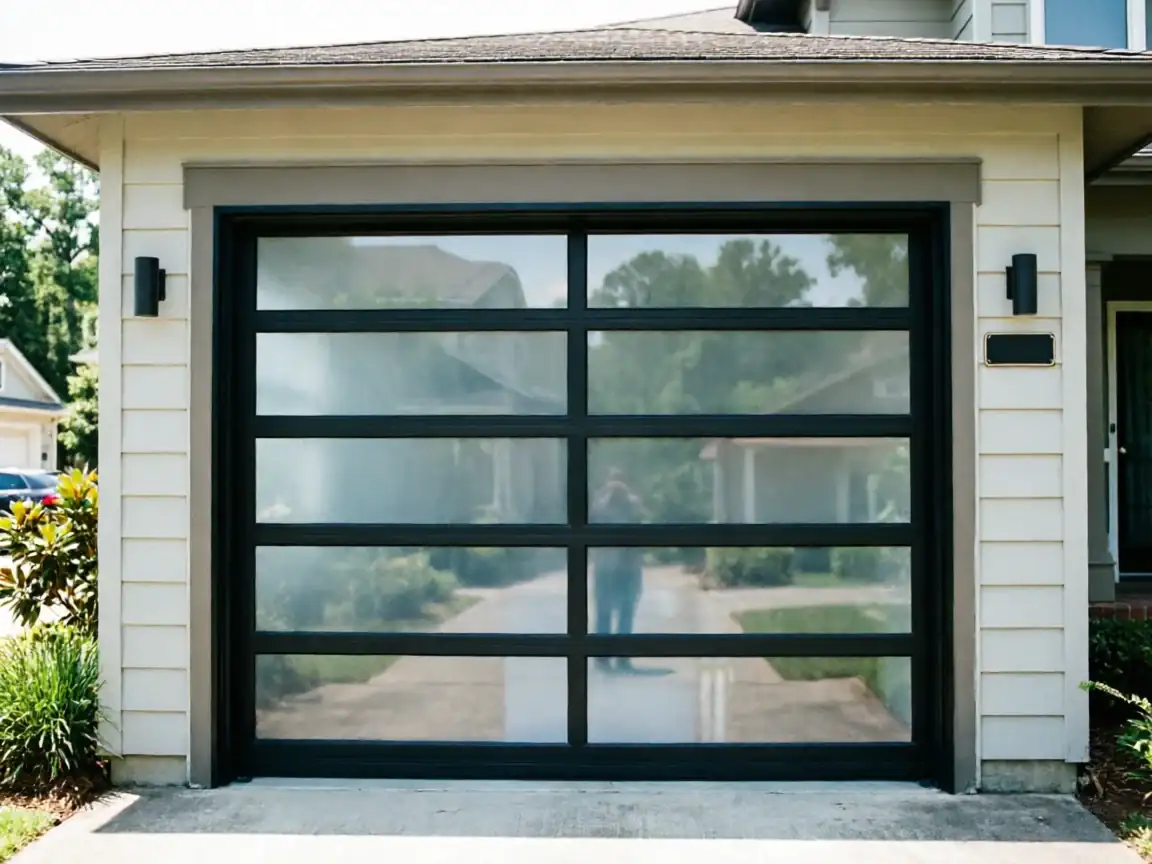
Built later, during the stretch that ran up through 2011 across this area - the door itself may already be a heavier double-layer steel or composite panel, which changes the math on drive strength. Either way, the number depends on what's actually hanging in the opening, not on a rate card.
Why This Fails Locally
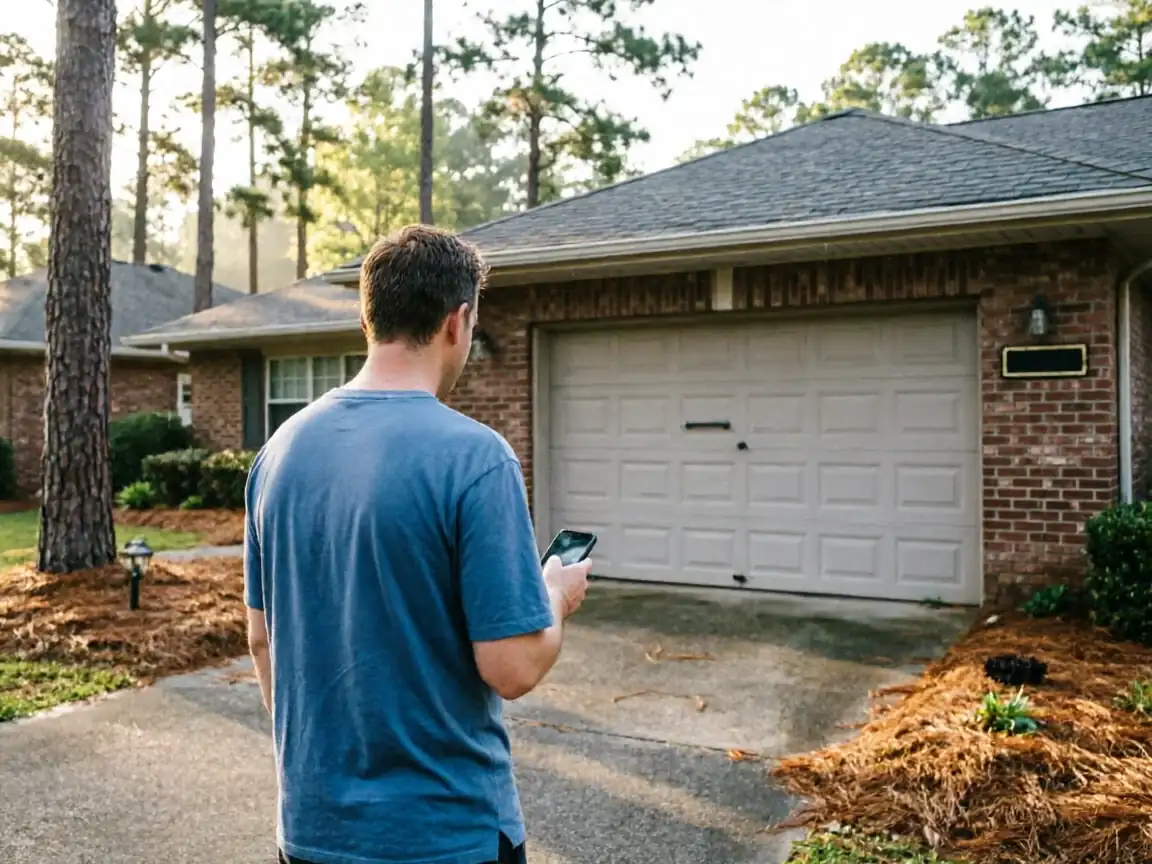
The housing stock in this part of the service area centers on 1984, with most of it falling into that broader 1964-2011 build range. A door and opener installed when a house went up in the mid-80s is now pushing forty years old, and that's the piece that actually fails - not the door panel itself, which is usually just steel and holds up fine, but the drive. Gears inside an original chain-drive unit wear down to plastic dust after enough seasons. Capacitors in the motor go first on the hot, humid stretches this area gets, and the mild-with-occasional-freeze winters here still put enough cold snap into the garage to stiffen old grease and strain a tired motor on the first pull of the morning.
With roughly 1,874 households in this immediate area, that's a lot of garages built in the same decade, which means a lot of openers aging out on a similar clock. It's not a dramatic failure - no one wakes up to a door stuck shut overnight. It's a slow one: the opener runs louder, reverses for no reason, or starts dropping the remote signal, right up until the day it doesn't start at all.
The DIY Question
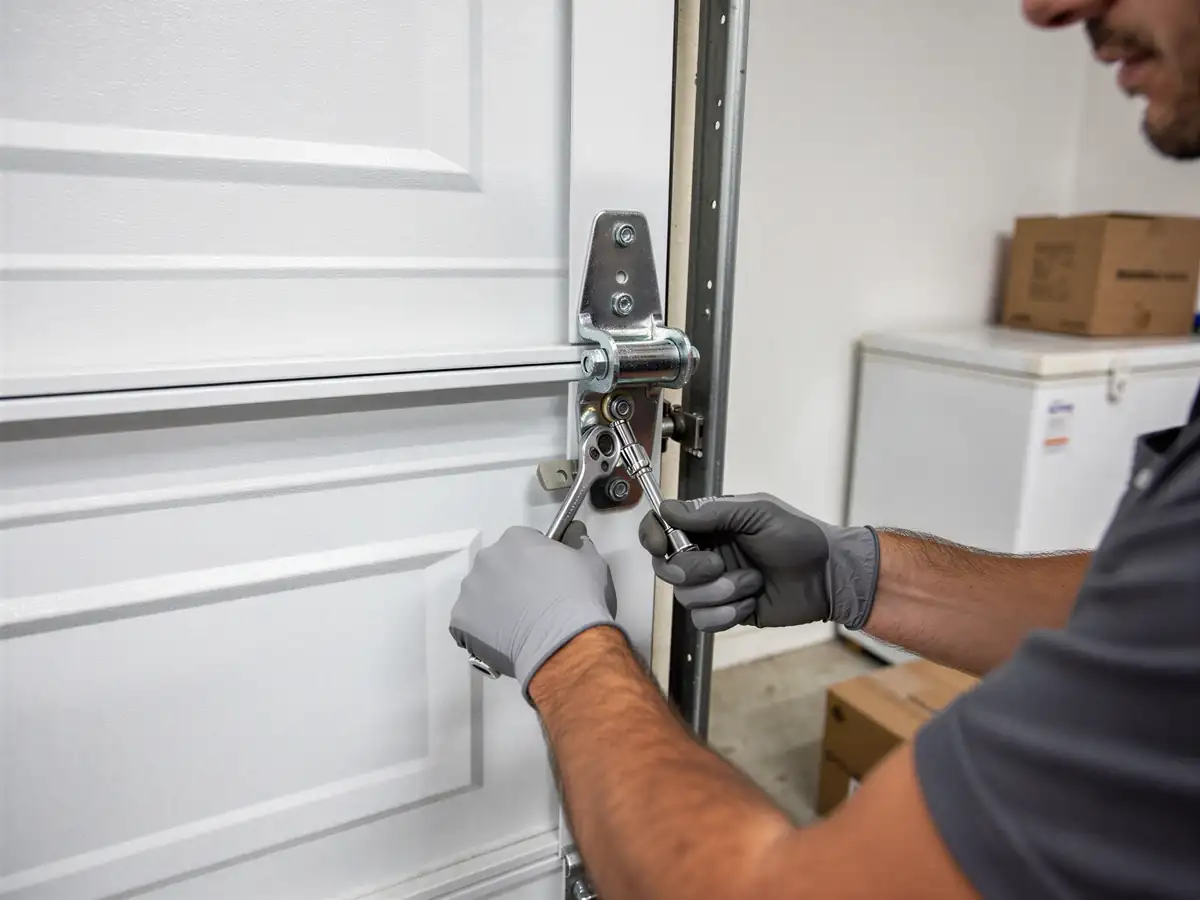
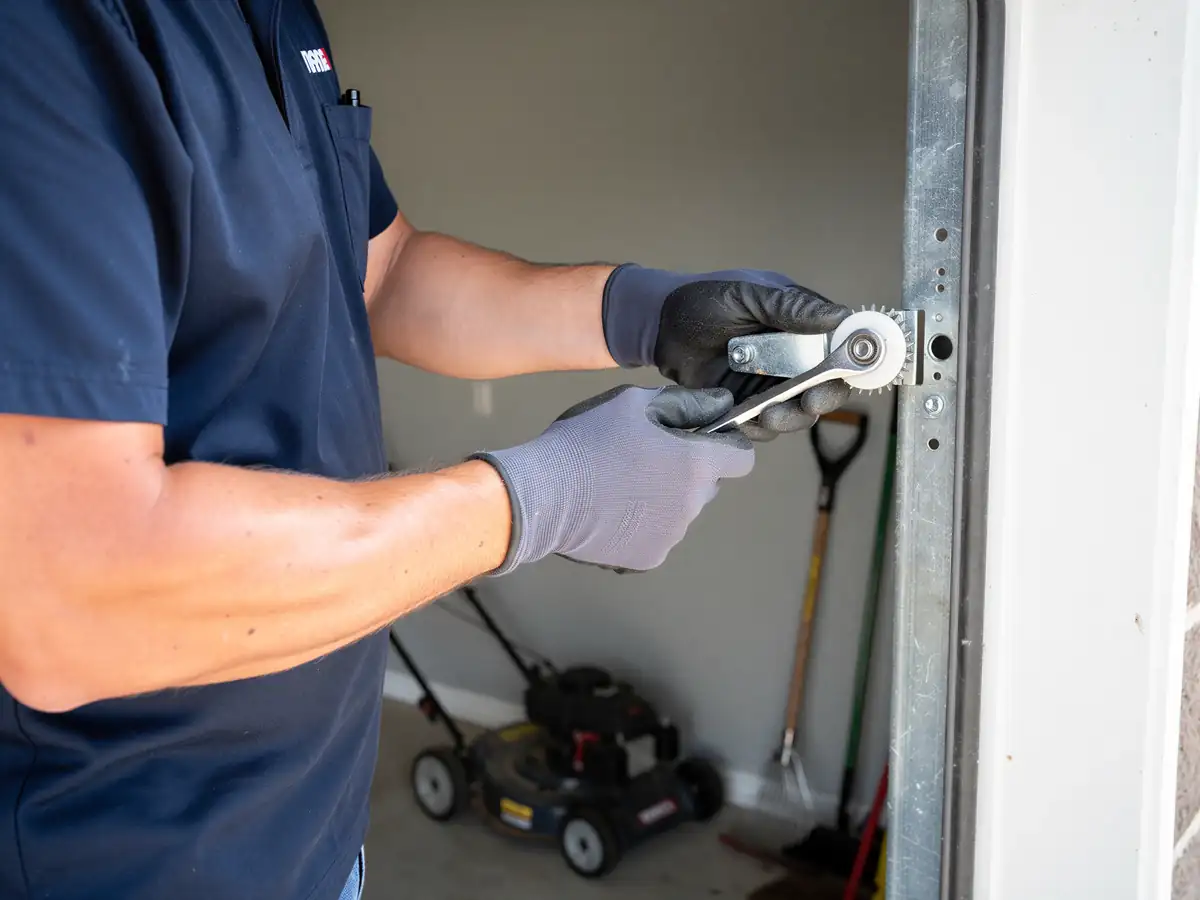
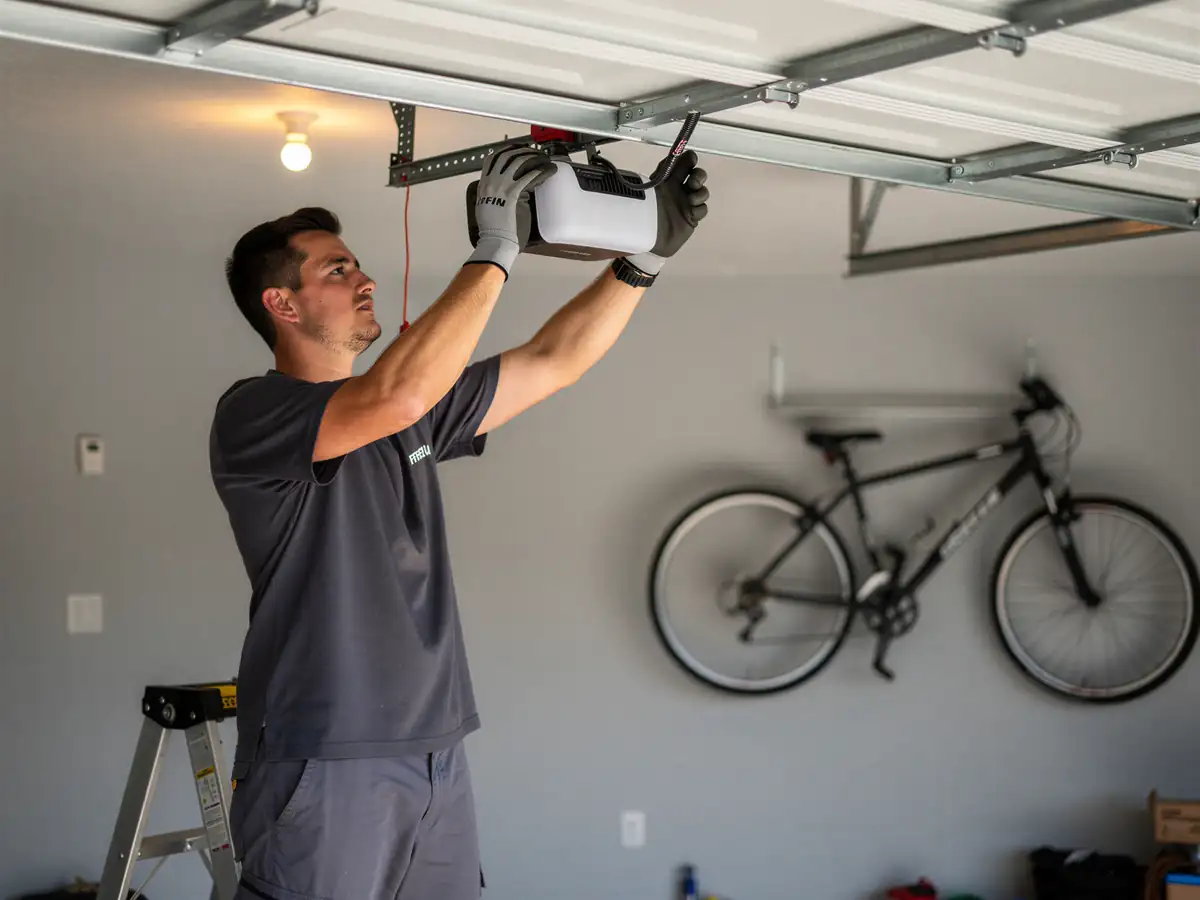
A straight opener swap - same mounting, same door, no spring work - is within reach for a homeowner comfortable on a ladder with a drill. The part that trips people up on a house from this era is the bracket. Header brackets installed in the 1980s were sized for the opener that came with the house, and reusing an undersized or rusted bracket with a new, heavier unit is how openers end up ripping loose from the ceiling months later.
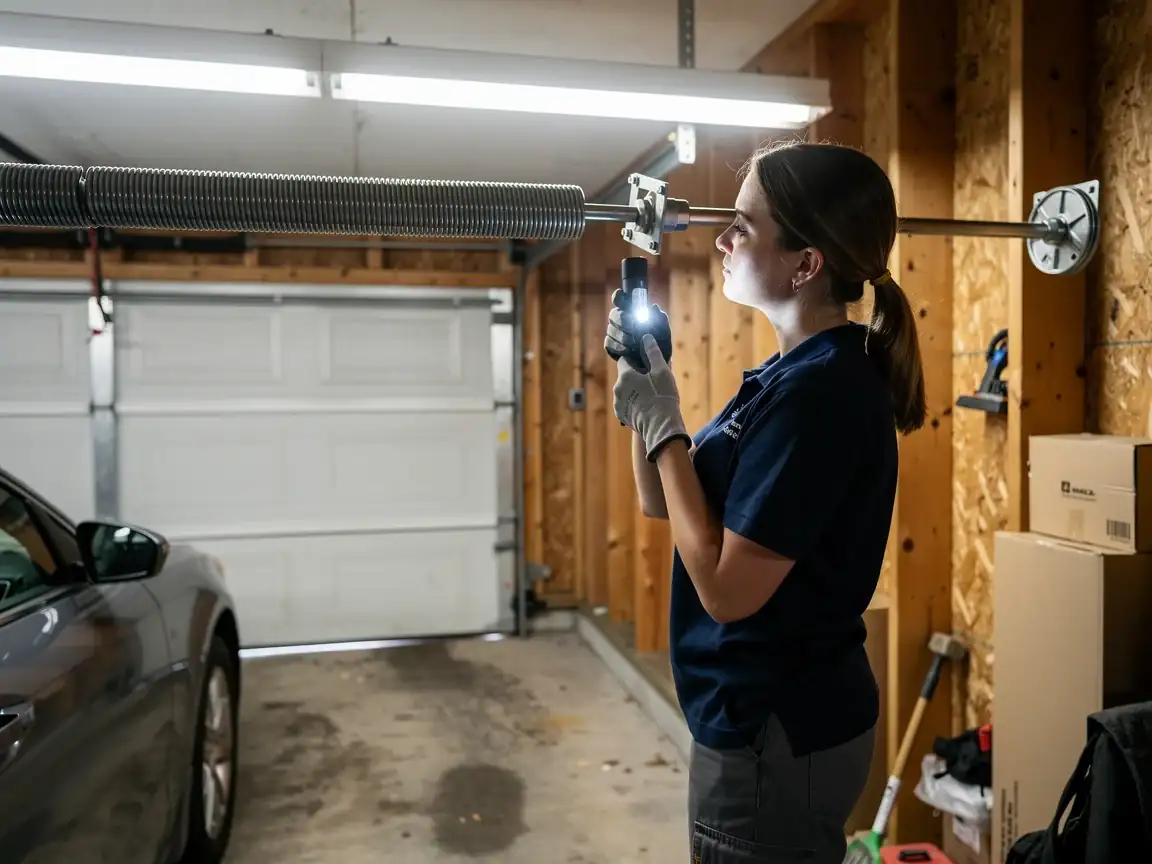
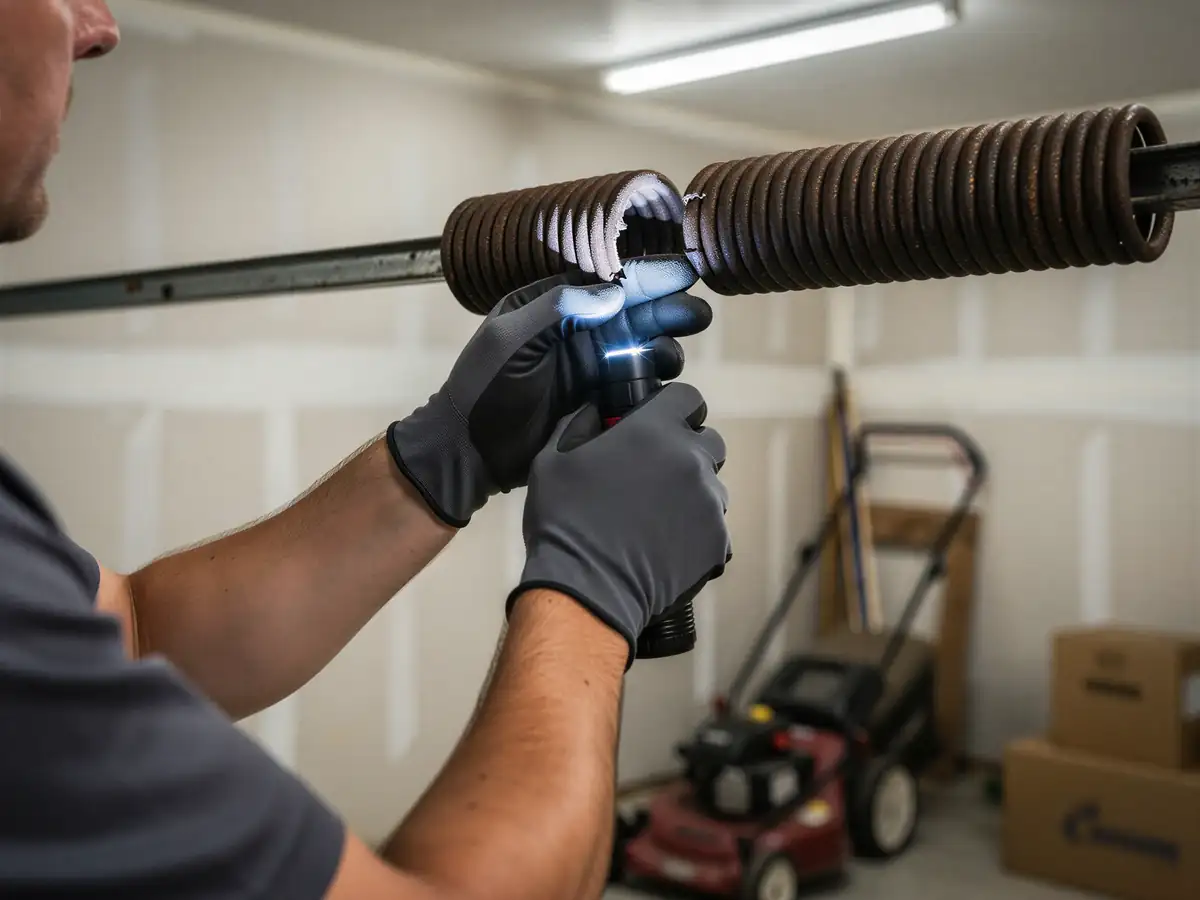
We'll say the honest thing here: if your garage has the original torsion spring system from a build this old and it's never been serviced, that's not a DIY opener swap anymore - that's a spring job first, under real tension, and we don't recommend a homeowner touch that part regardless of how handy they are. Get the spring and bracket checked before you buy an opener online, or call us and we'll check it as part of the install.
Time on the Job
We run this job out of Savannah, about 8 miles from Montgomery
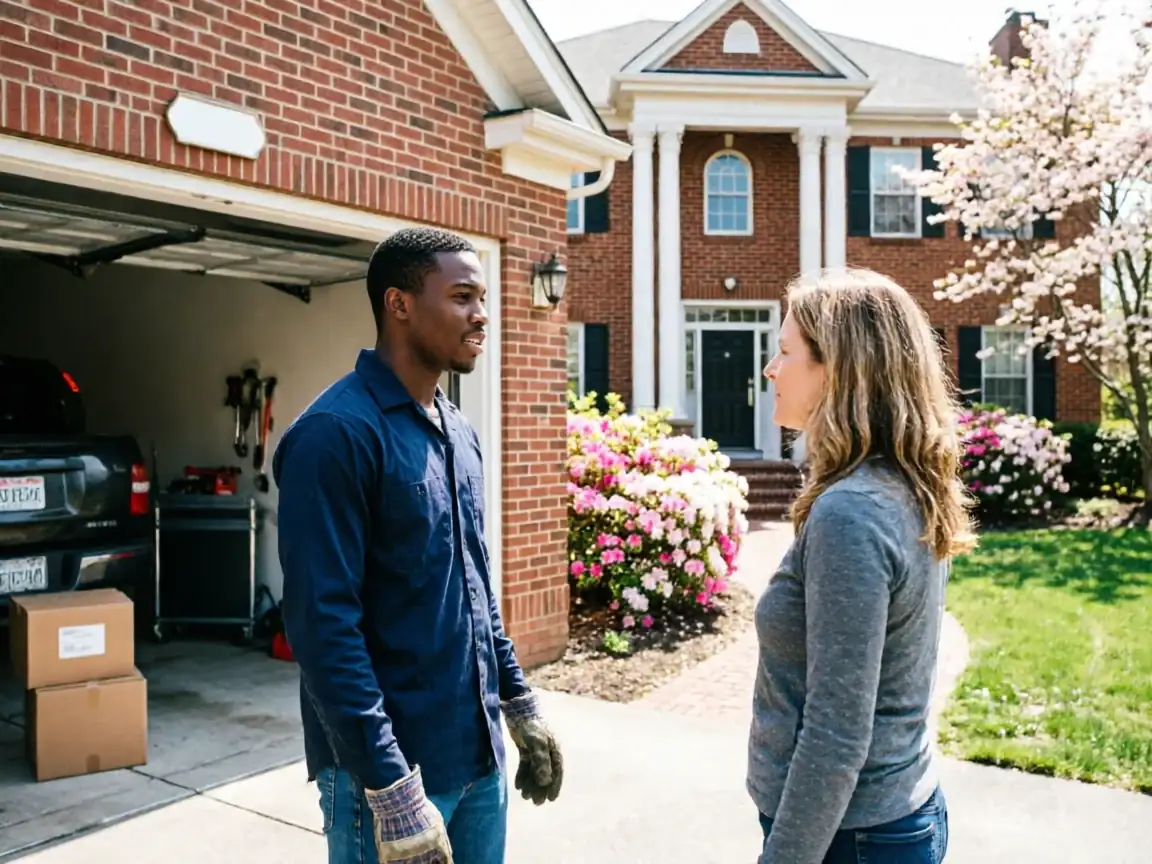
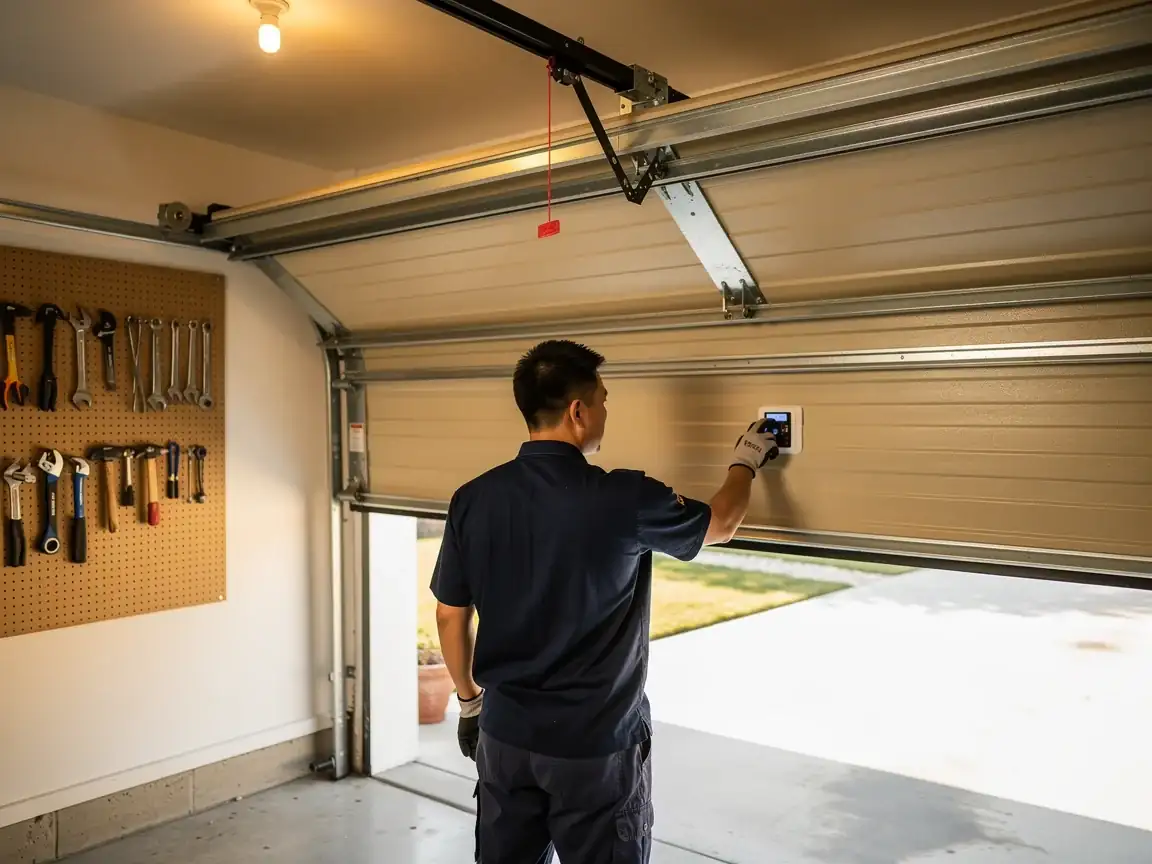
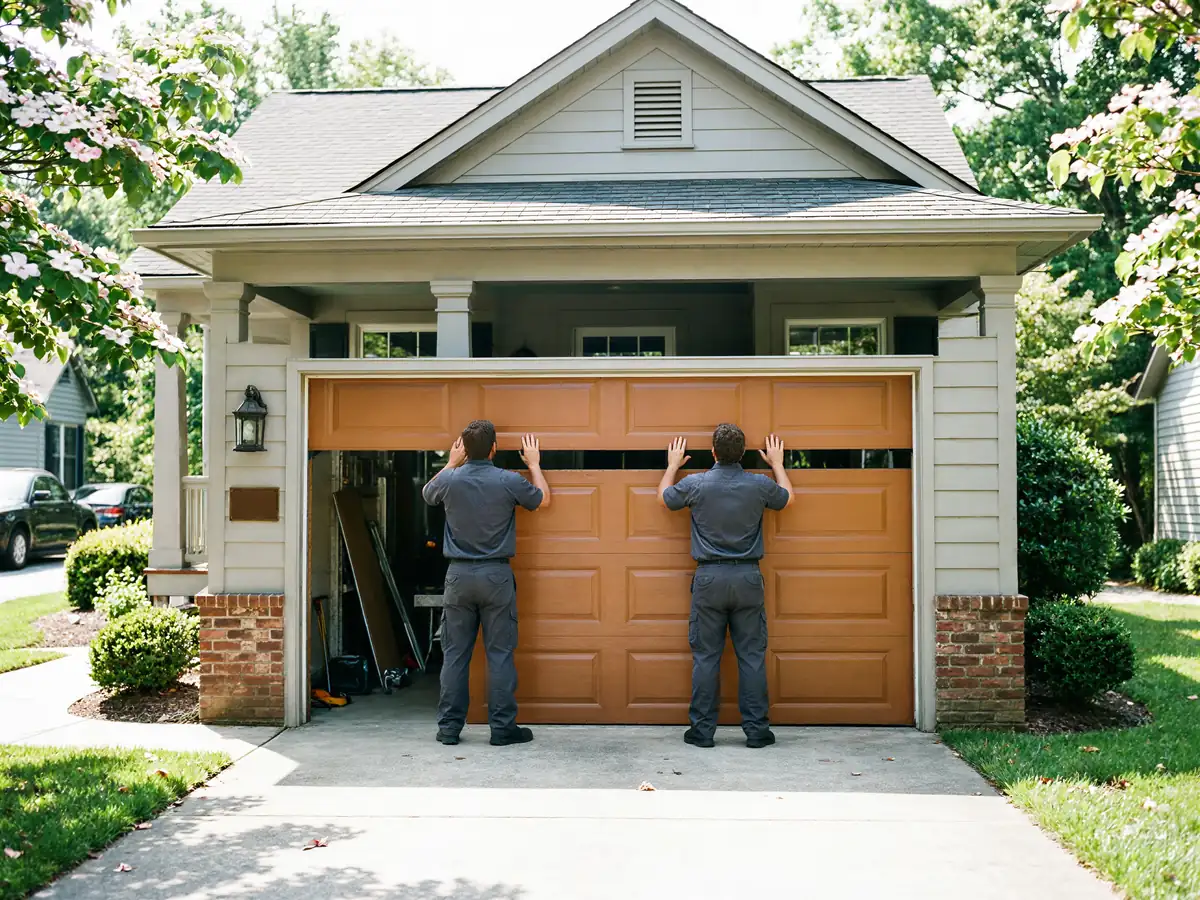
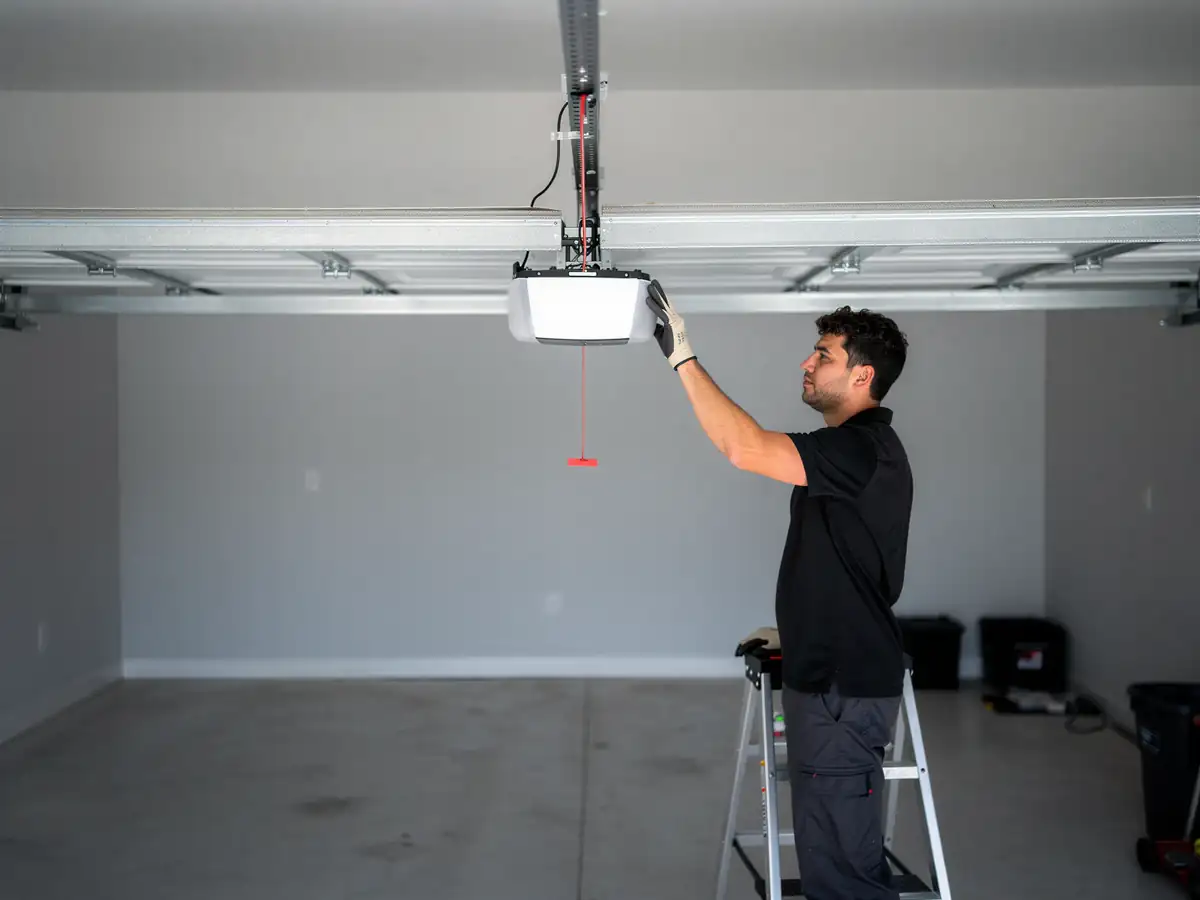
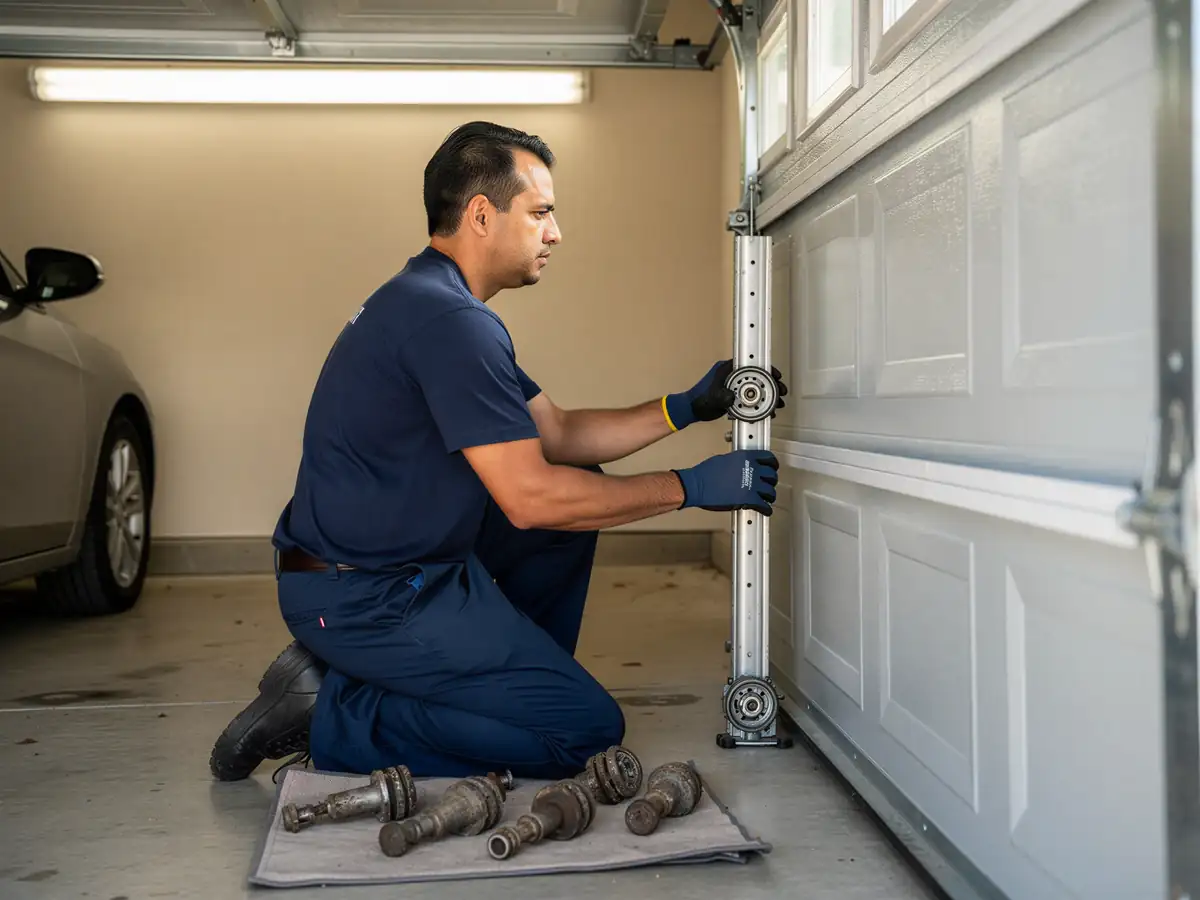
So travel time is part of scheduling but it's not something we're going to promise a window around. Once we're on site, a straight opener replacement on an existing 1980s-style door - same bracket, same rail length, no spring work - is usually a same-visit job. Add a bracket replacement or a spring that needs attention first, and that visit runs longer, sometimes into a second trip if parts aren't something we carry on the truck that day.
- 8 miles
We'd rather tell you upfront that a job might stretch past one visit than rush a bracket mount on an opener that's going to carry real weight for the next decade