Time on the Job
An emergency call rarely starts with a mystery
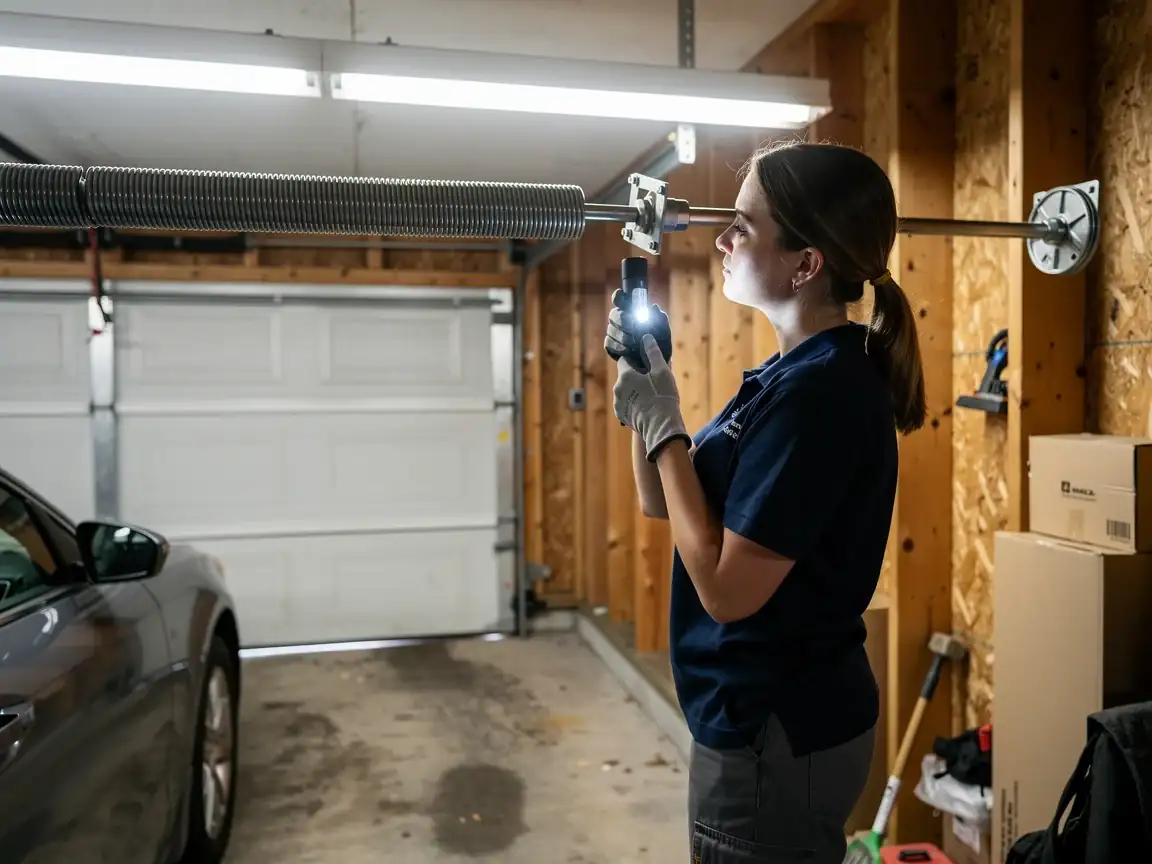
By the time you've called us, the door is already stuck, the spring has already let go, or the opener is already grinding against a bent track. Our job on arrival is to figure out fast whether the fix is a twenty-minute cable re-seat or a full spring replacement that needs the door disassembled.
Savannah's housing stock runs from 1964 up through 2011
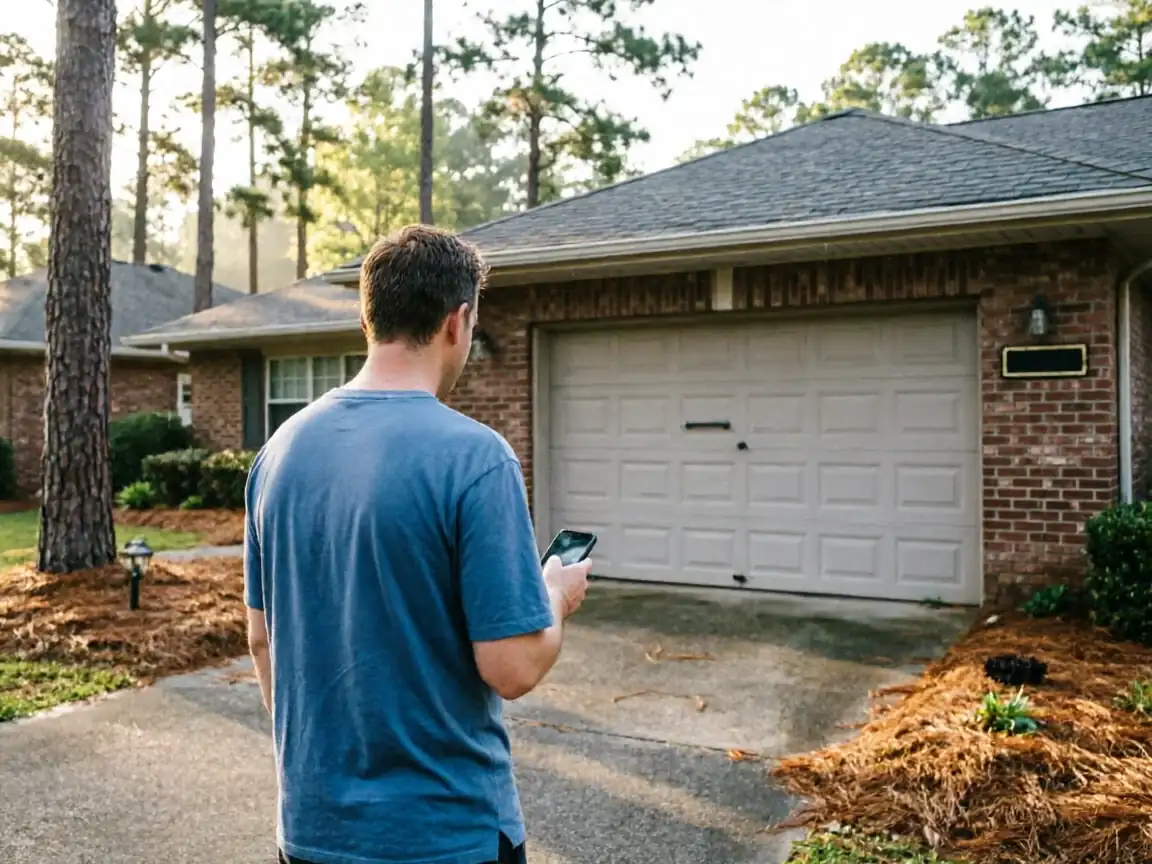
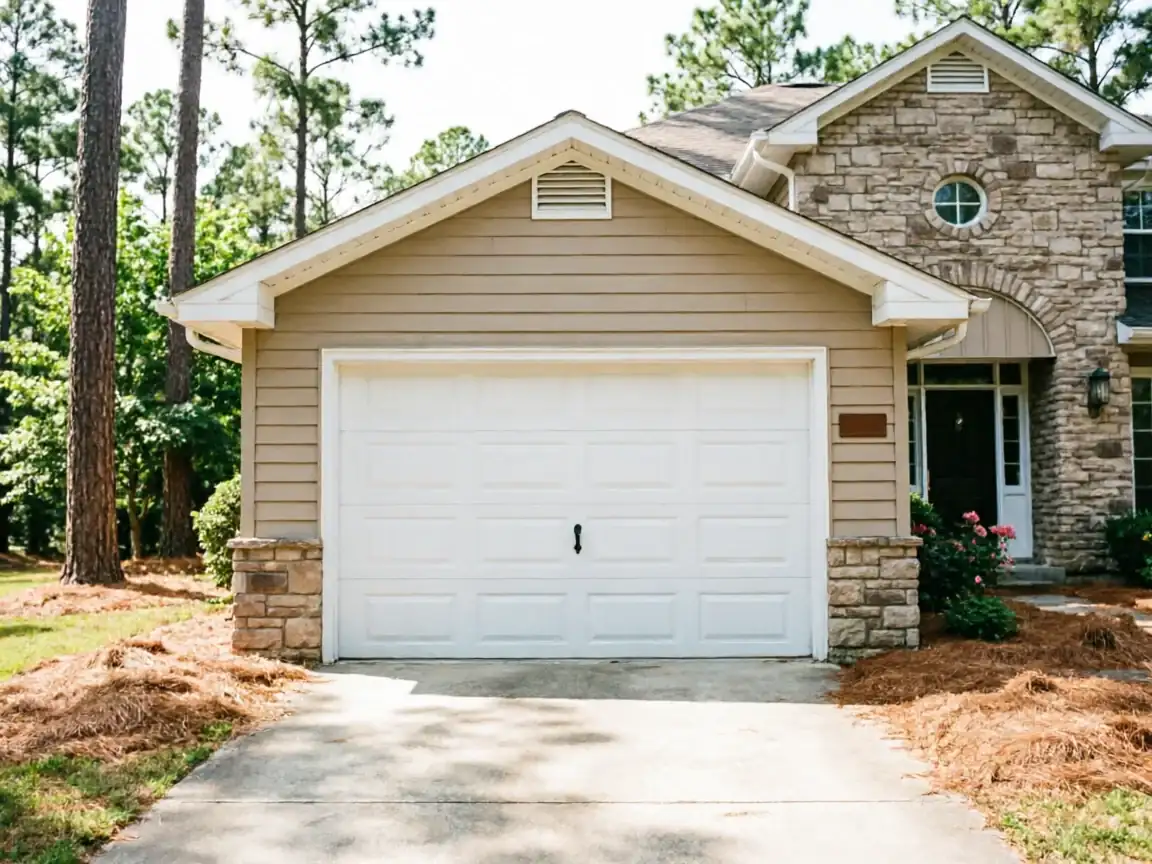
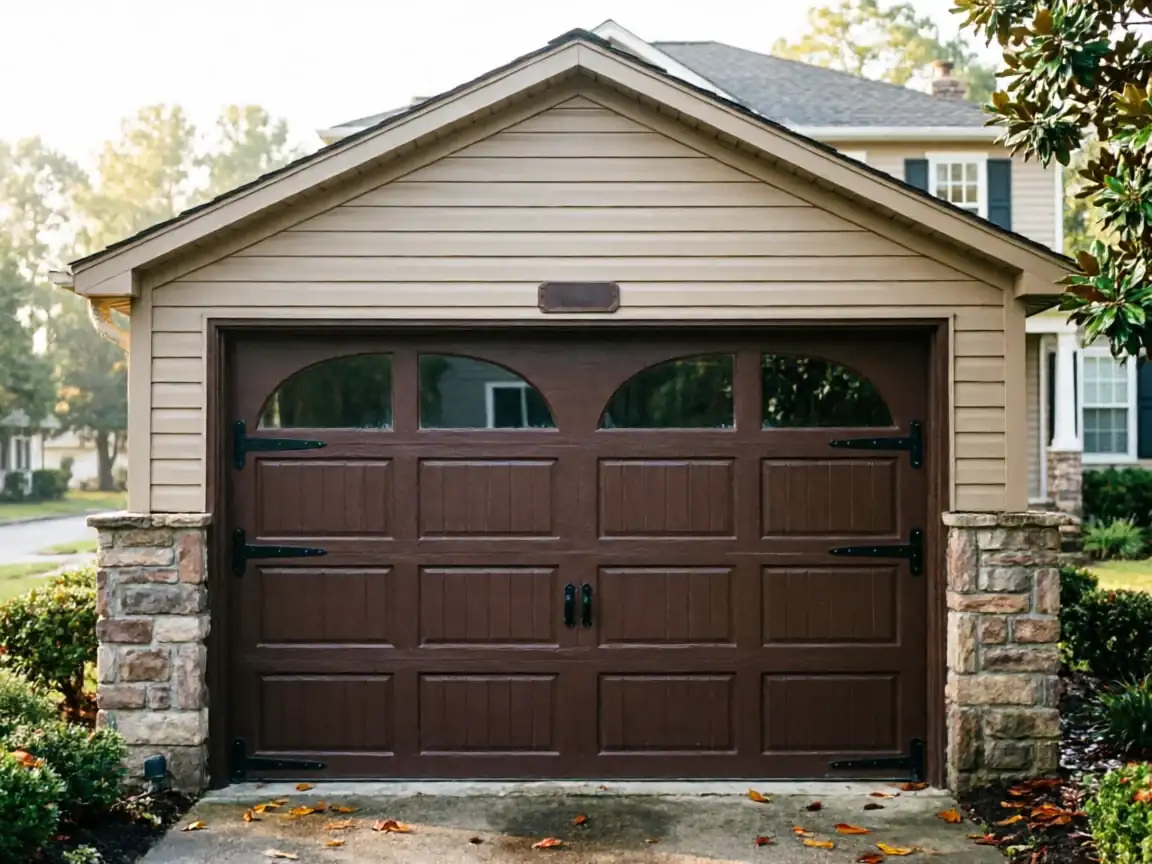
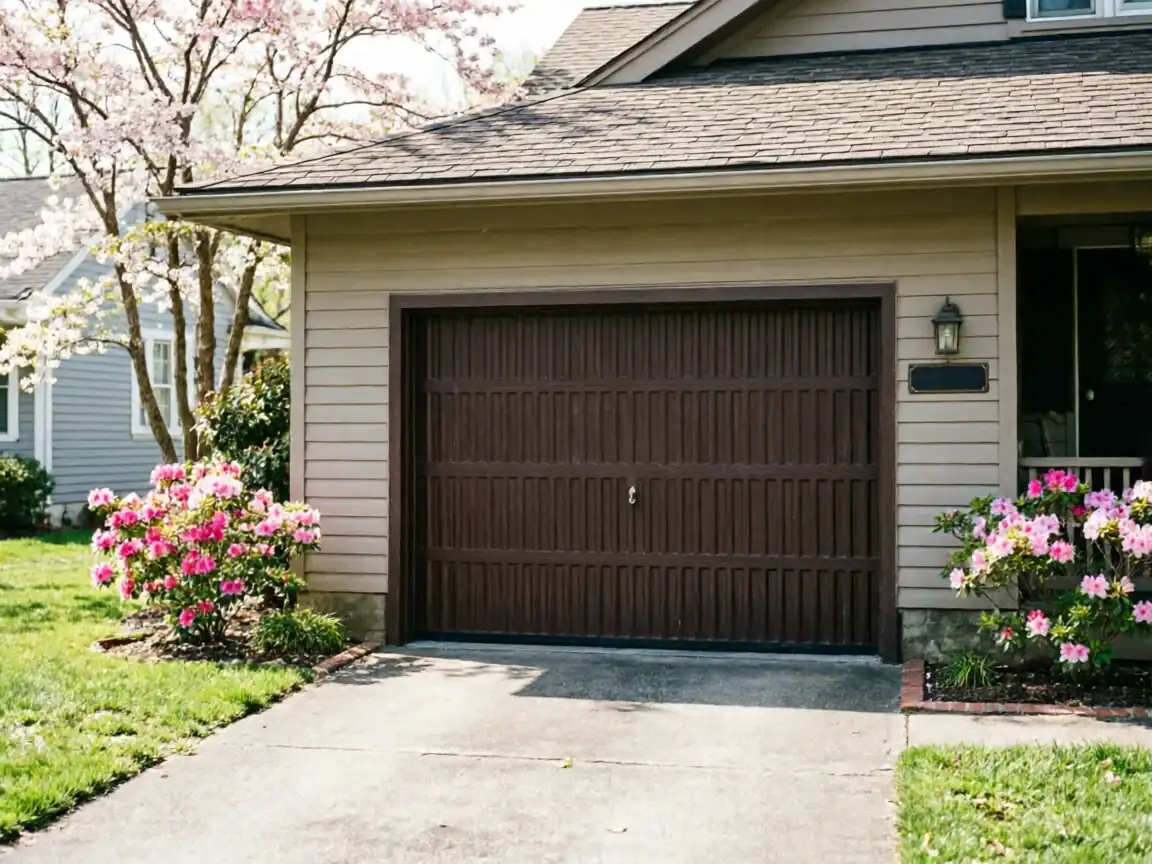
With the bulk of it dated to the 1980s and 90s across the area's established neighborhoods. That spread matters on an emergency call because the hardware on a house built in 1986 is a different animal from hardware on a 2005 build - different spring gauge, different drum size, sometimes a different mounting style entirely. We carry stock for both, but we still have to identify which house we're standing in front of before we touch anything.
We won't pretend every call is quick
If a torsion spring has taken the cable and drum down with it, or if a panel has folded from impact, that's a longer job and sometimes a next-day parts order rather than a same-visit fix. We'll tell you that on the phone, not after we've already opened the door panel.
What You Are Seeing
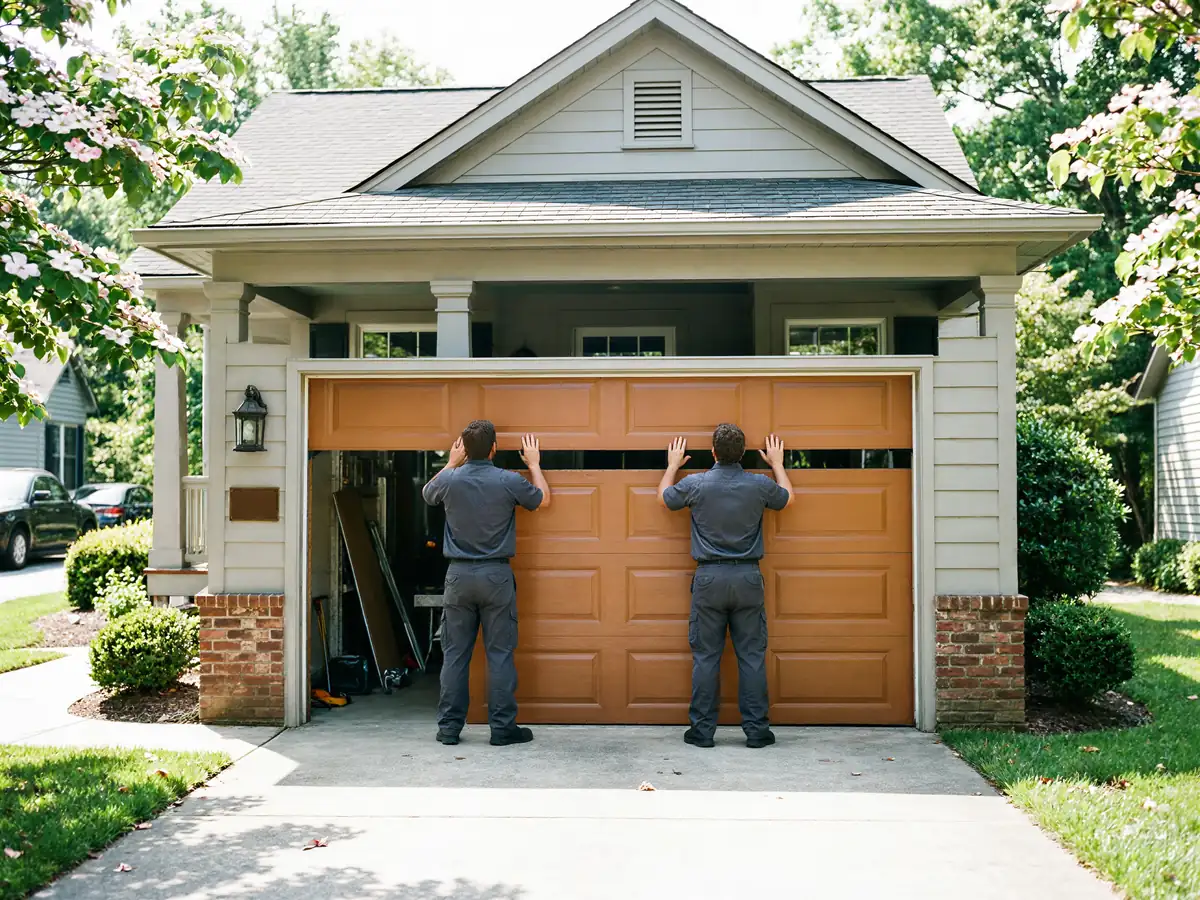
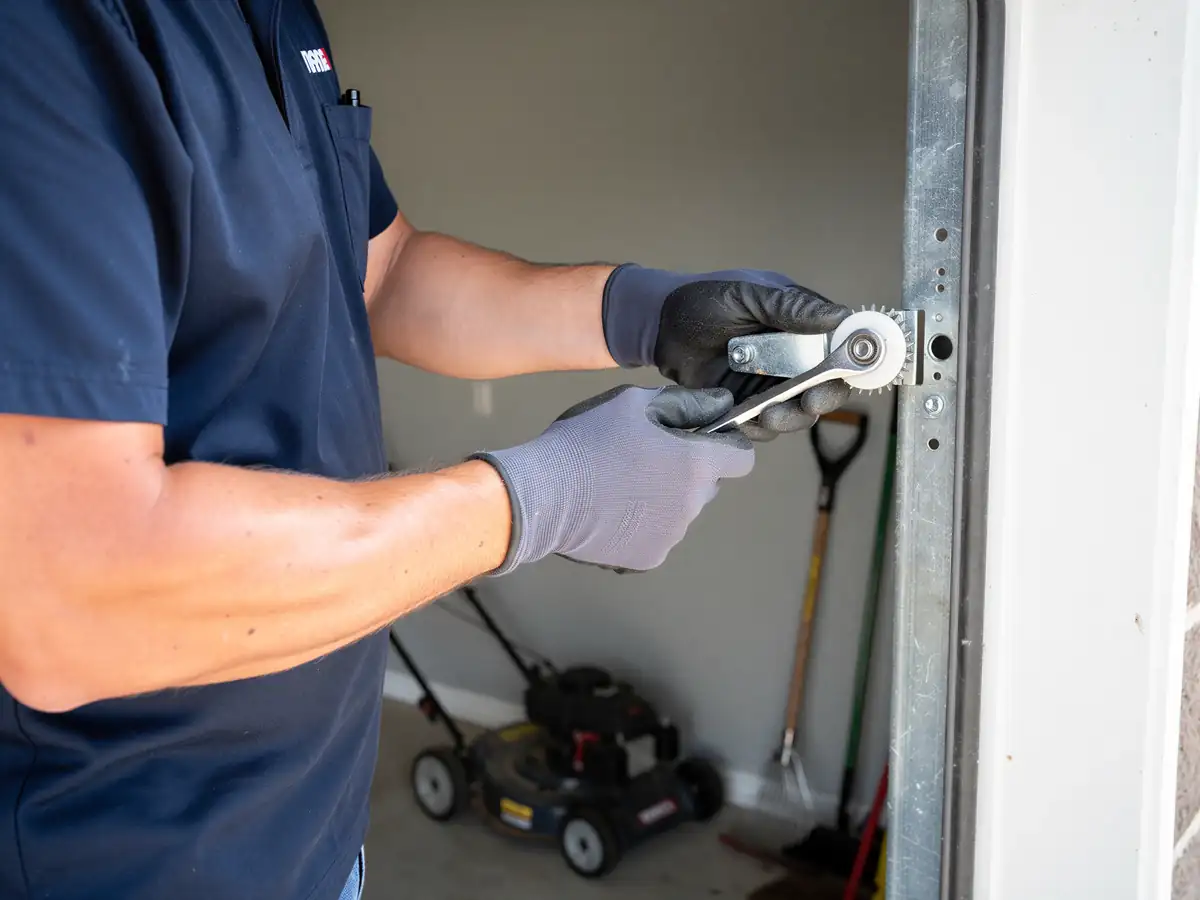
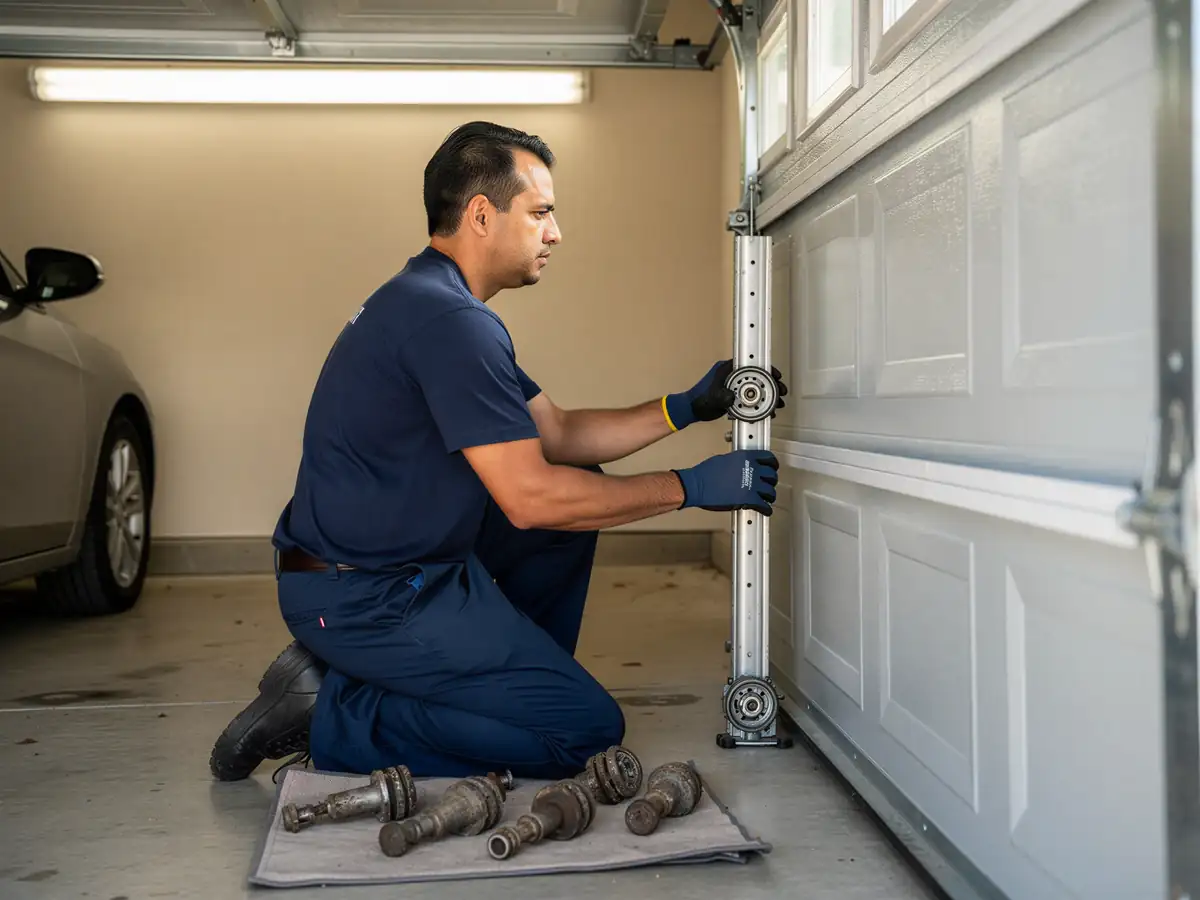
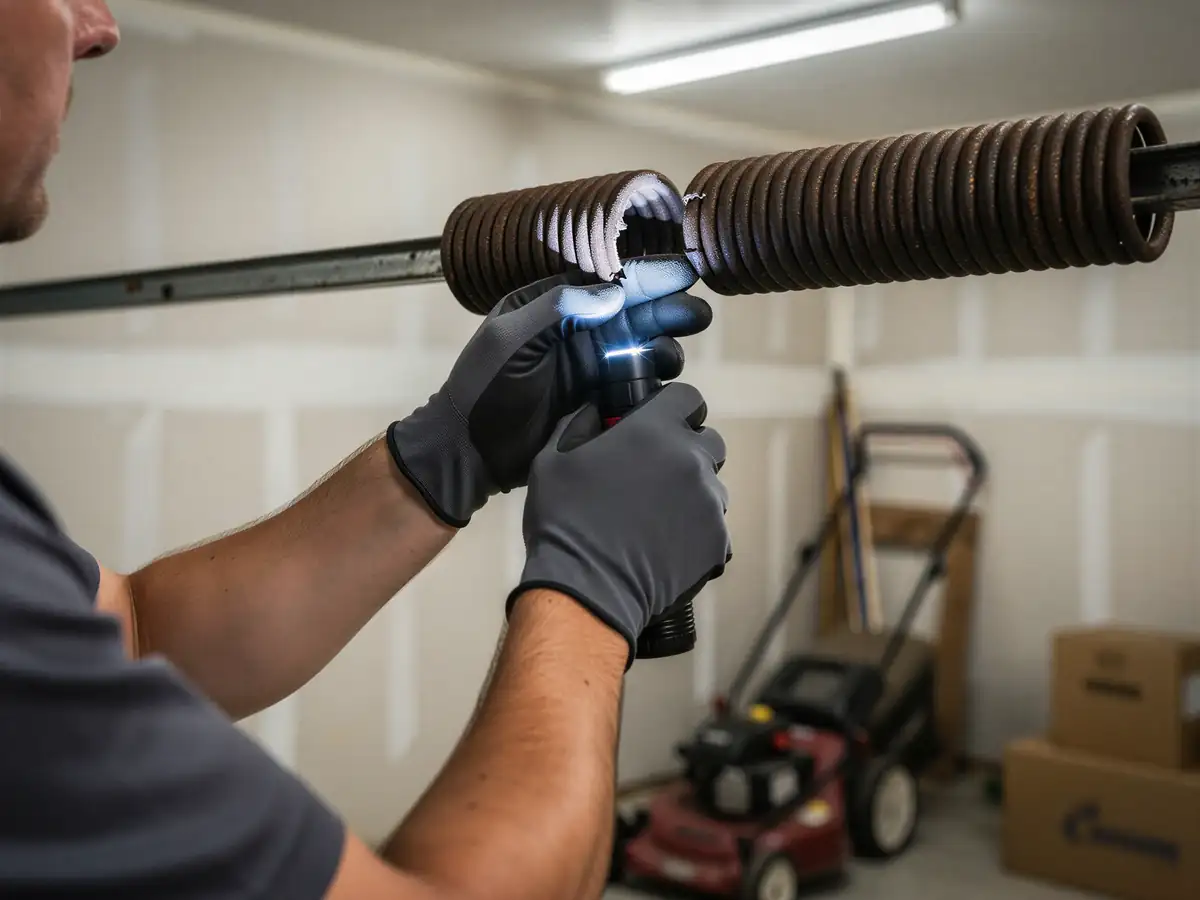
The calls we get as emergencies tend to fall into a short list: a torsion spring that's snapped clean (you'll hear the bang before you see the door won't move), a cable that's jumped the drum and left one side of the door hanging low, rollers that have worn out of their track and let the door tilt, or an opener that's running but not actually lifting anything because the connection to the door has failed.
Less dramatic but just as urgent: a door that won't close all the way, which on a house in this climate band means it sits open to humidity and occasional cold snaps overnight. A door stuck open is a security problem and a weather problem at the same time, which is why it counts as an emergency even without a loud bang involved.
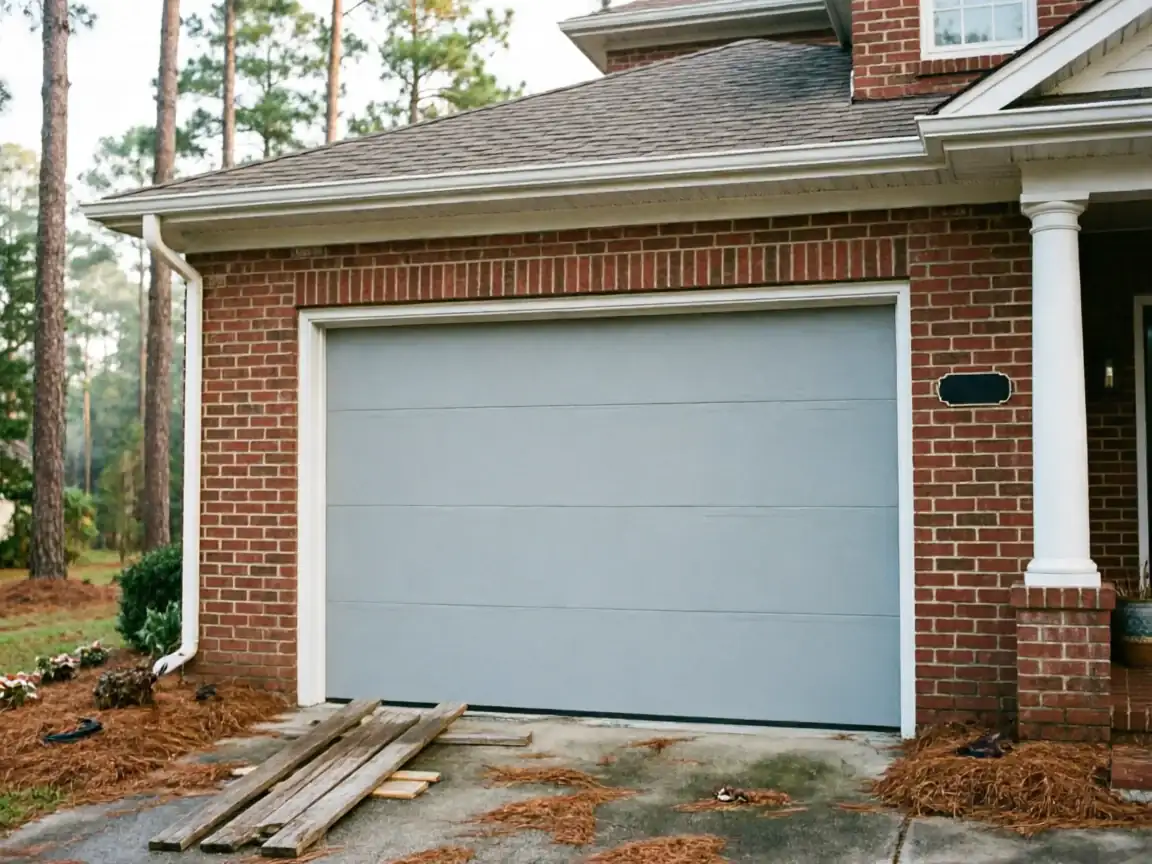
What we're not called out for as often, and what we won't invent urgency around, is cosmetic wear - a dented bottom panel that still opens and closes fine, or weatherstripping that's cracked but not letting in water. Those are real repairs, just not emergencies, and we'll say so rather than run up a bill.
Why This Fails Locally
Savannah's climate sits in a mild band with occasional freezes rather than a hard winter, which sounds like it should be easy on garage door hardware. In practice it means steel springs and cables go through repeated small cycles of expansion and contraction instead of one long cold season, and that cycling is what tires out a spring's coil wire over the years rather than any single event.
Pair that with the age of the housing. A large share of homes in the service area were built across the 1980s and 90s, with the broader range running from 1964 to 2011. Doors and openers installed when those houses were built or first remodeled are now old enough that springs are past their rated cycle count and original openers are running without the safety reversal sensors required in newer installs. We see torsion springs fail most often on houses in that middle age band - old enough to have cycled tens of thousands of times, not yet replaced because the door still looked fine until it didn't.
Newer builds aren't immune either. A door installed in the 2000s on a lighter-duty spring can still fail early if it was undersized for the door weight from the start.
How We Fix It
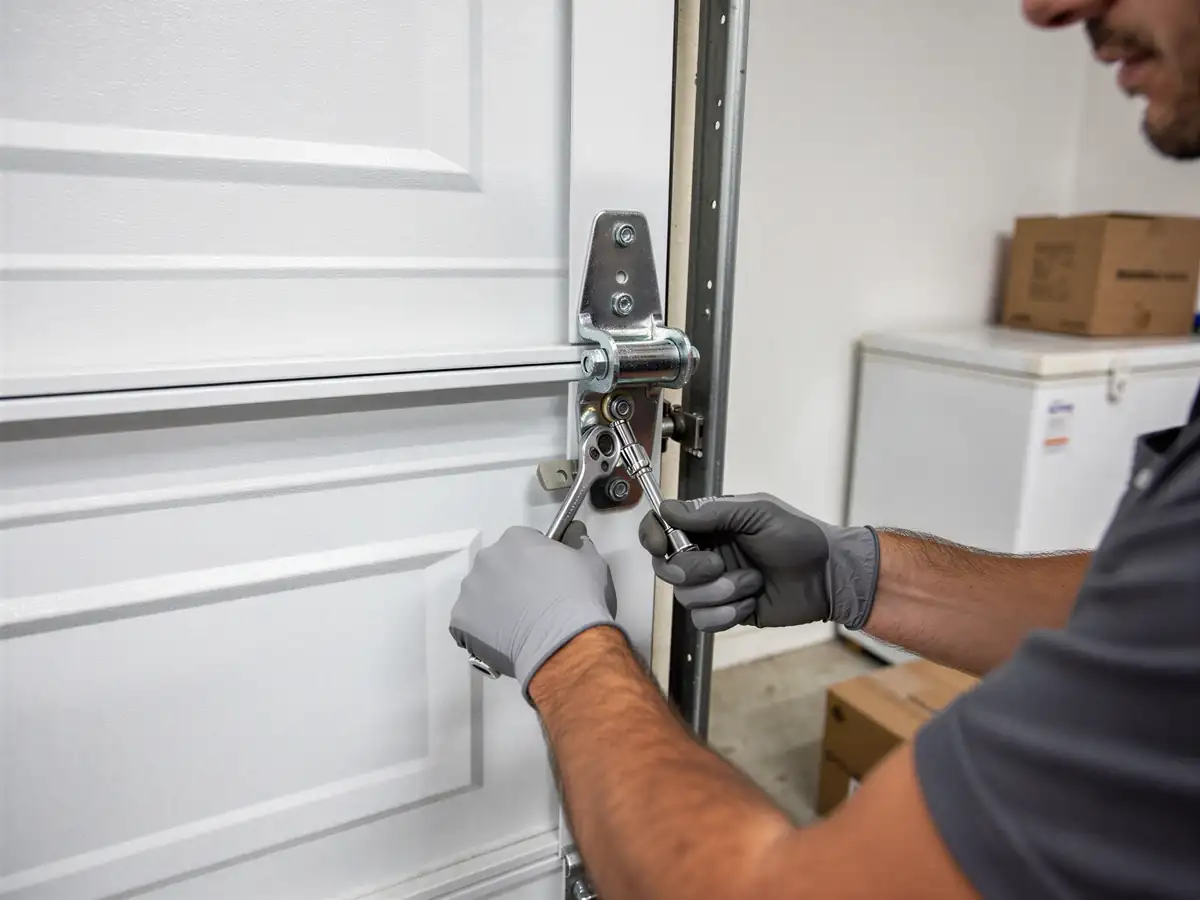
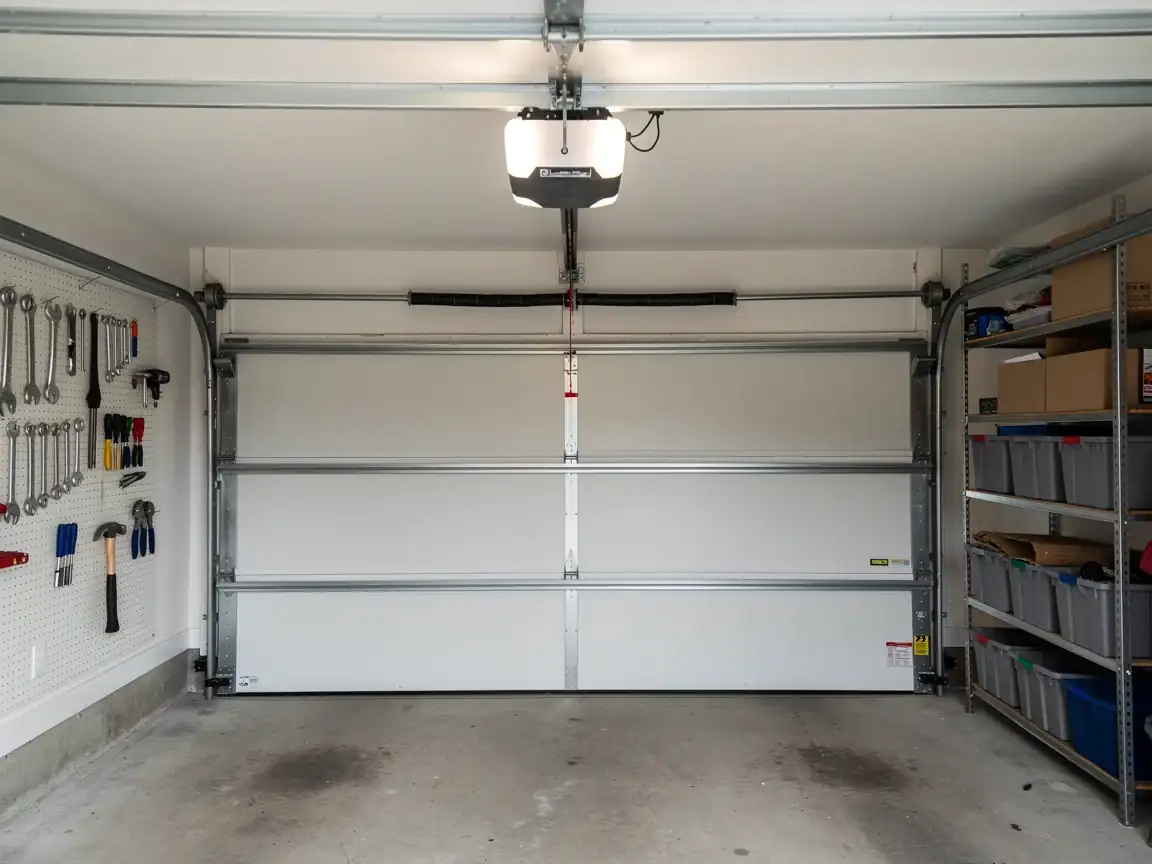
For a broken torsion spring, we replace it matched to the door's actual weight and cycle needs
Not just whatever was on the shelf when the house was built - undersizing is a common reason springs fail early in the first place. For a jumped cable, we re-seat it and check the drum and bottom bracket for wear before calling the job done, since a cable that jumps once usually has a reason.
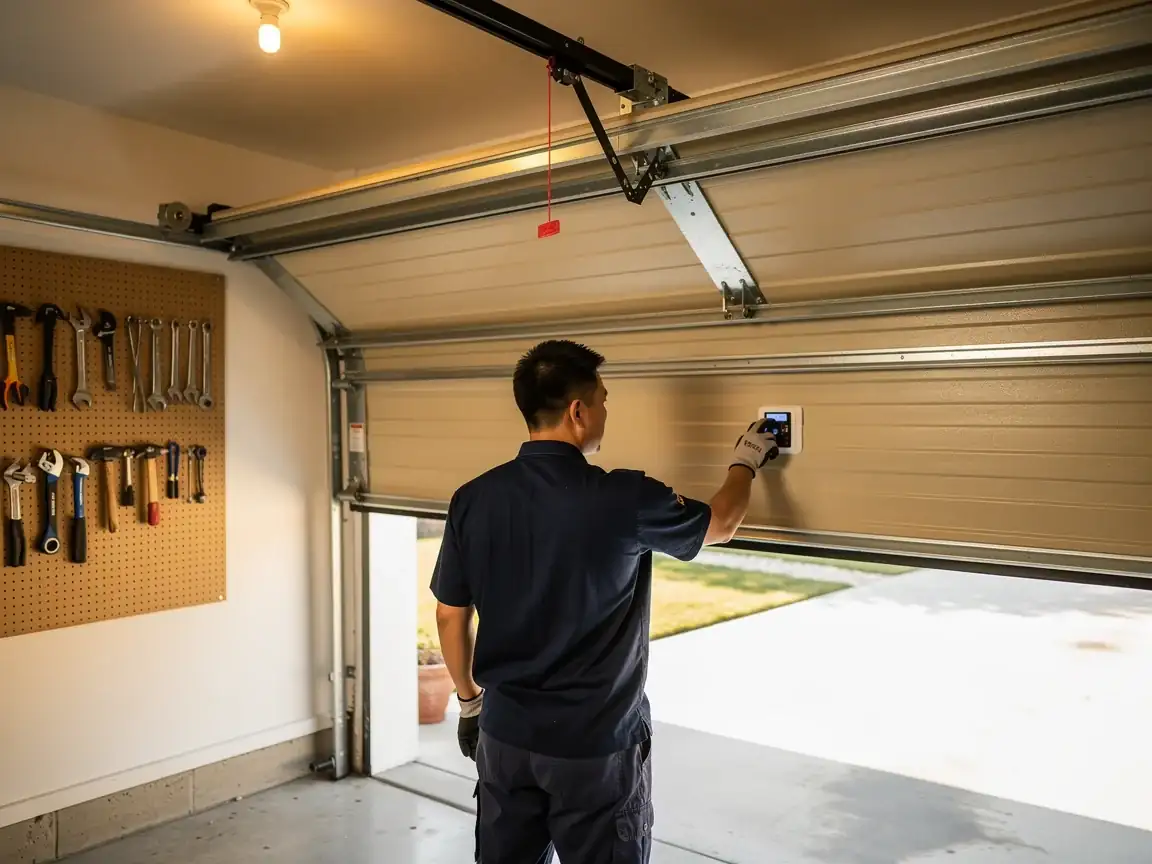
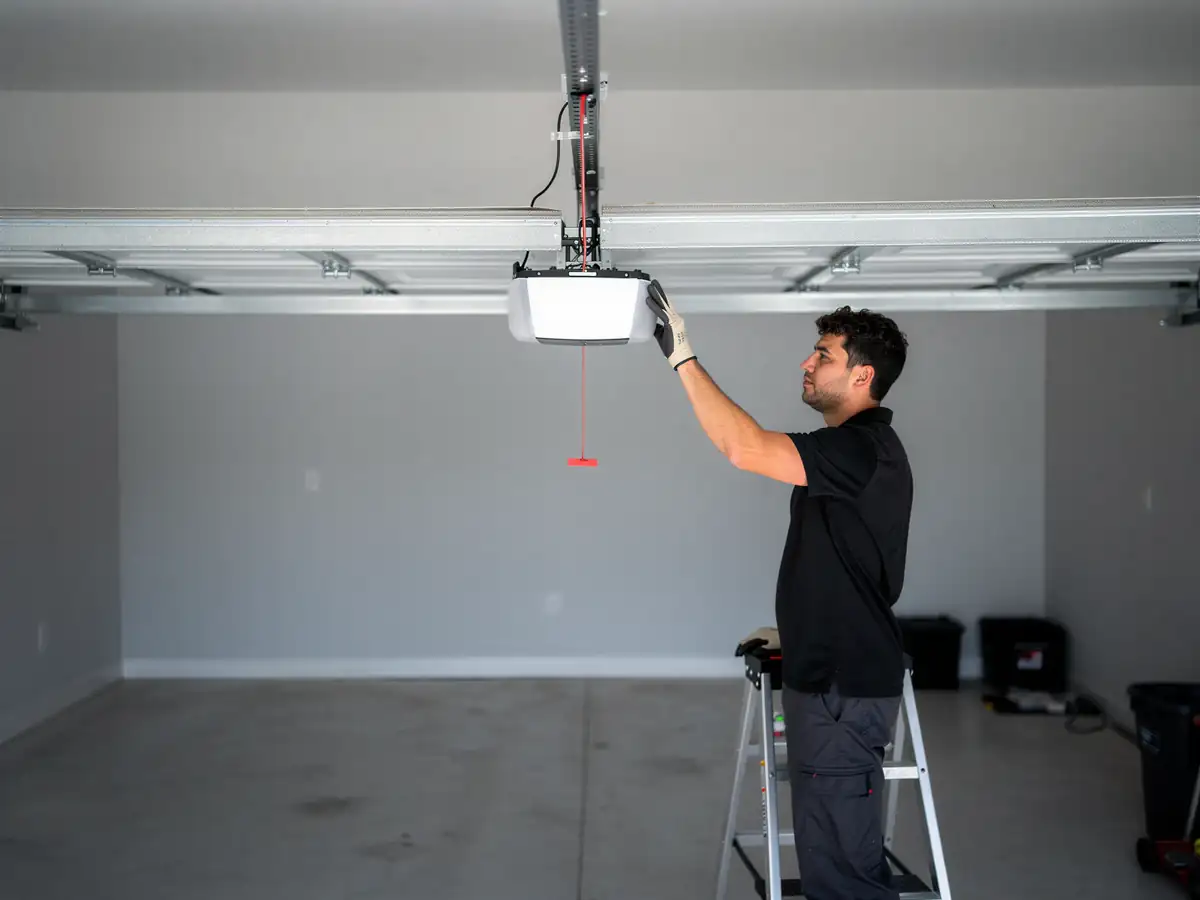
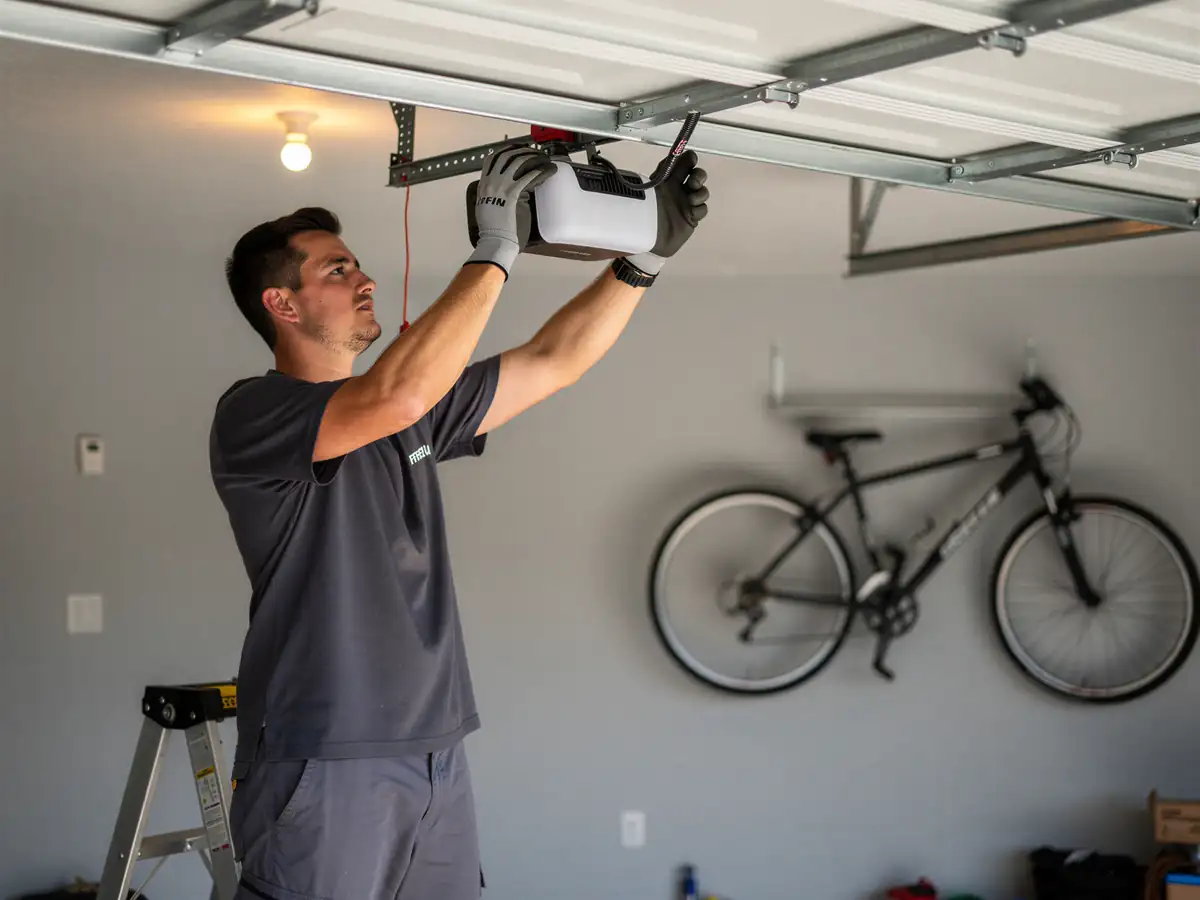
For opener issues, we check the connection between the opener carriage and the door arm first
That's the most common point of failure on an opener that runs but doesn't lift - before assuming the motor itself is bad. If the opener does need replacing, we'll say so plainly rather than keep patching a unit that's done.
One honest limit: if a door has been impact-damaged badly enough that the frame itself is bent
Repair sometimes costs close to what replacement does once you add up panel, track, and labor. We'll give you both numbers and let you decide, rather than push a repair that doesn't make financial sense just to avoid a bigger conversation.