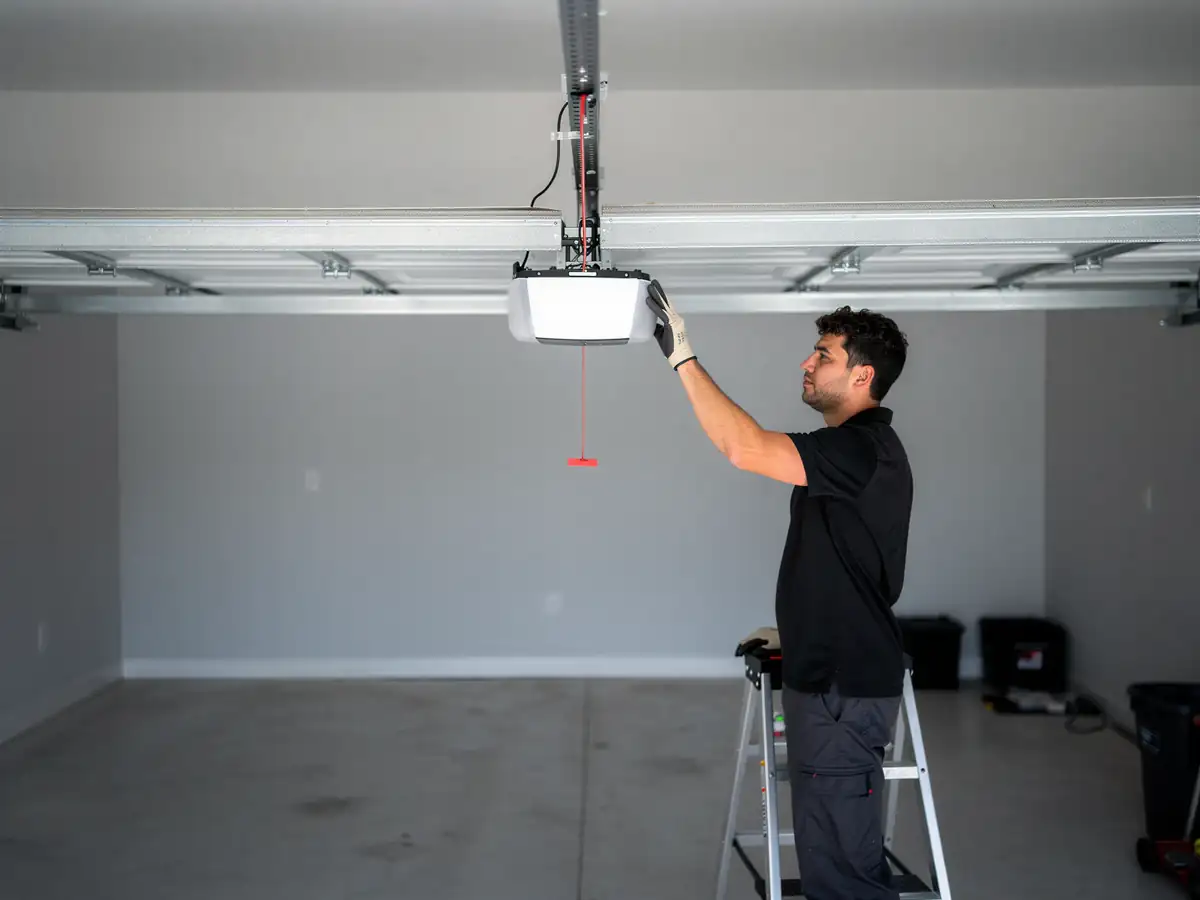
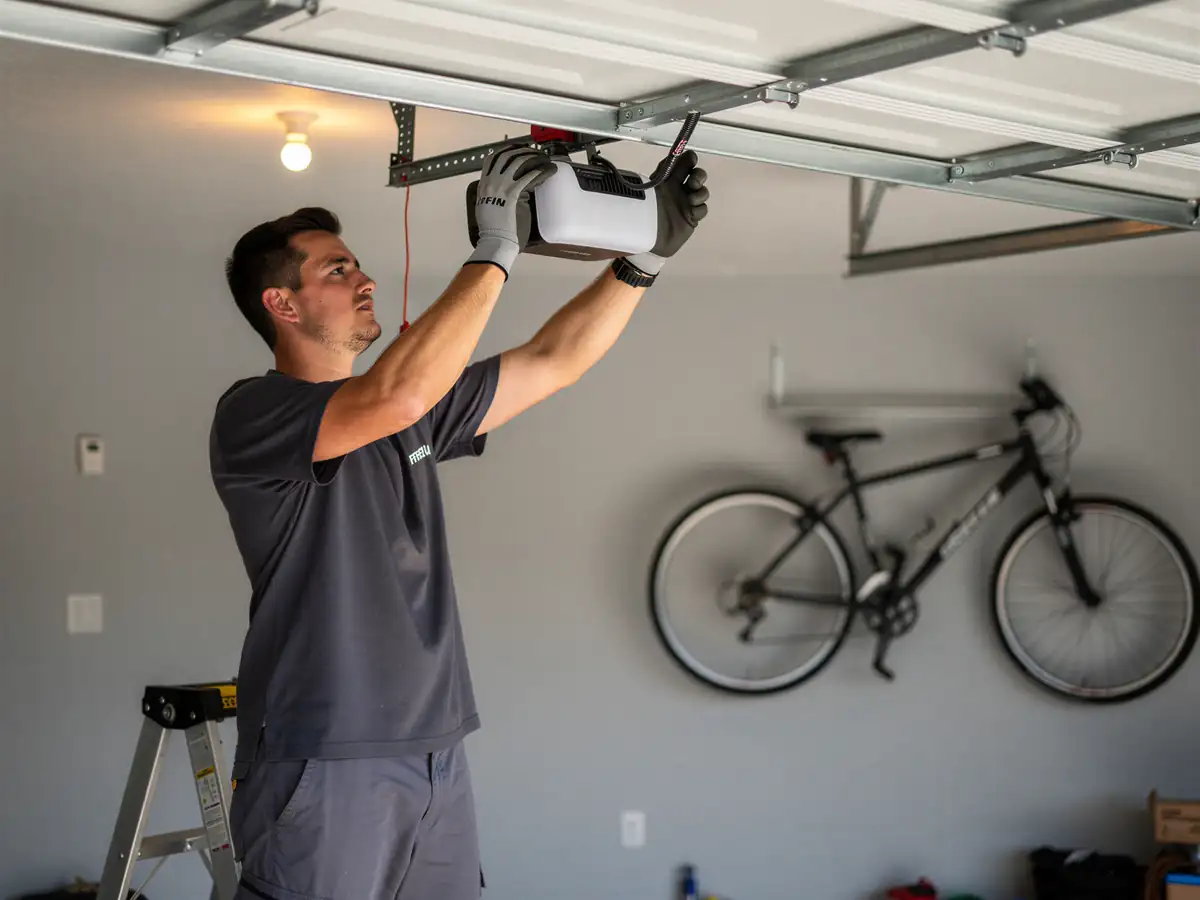
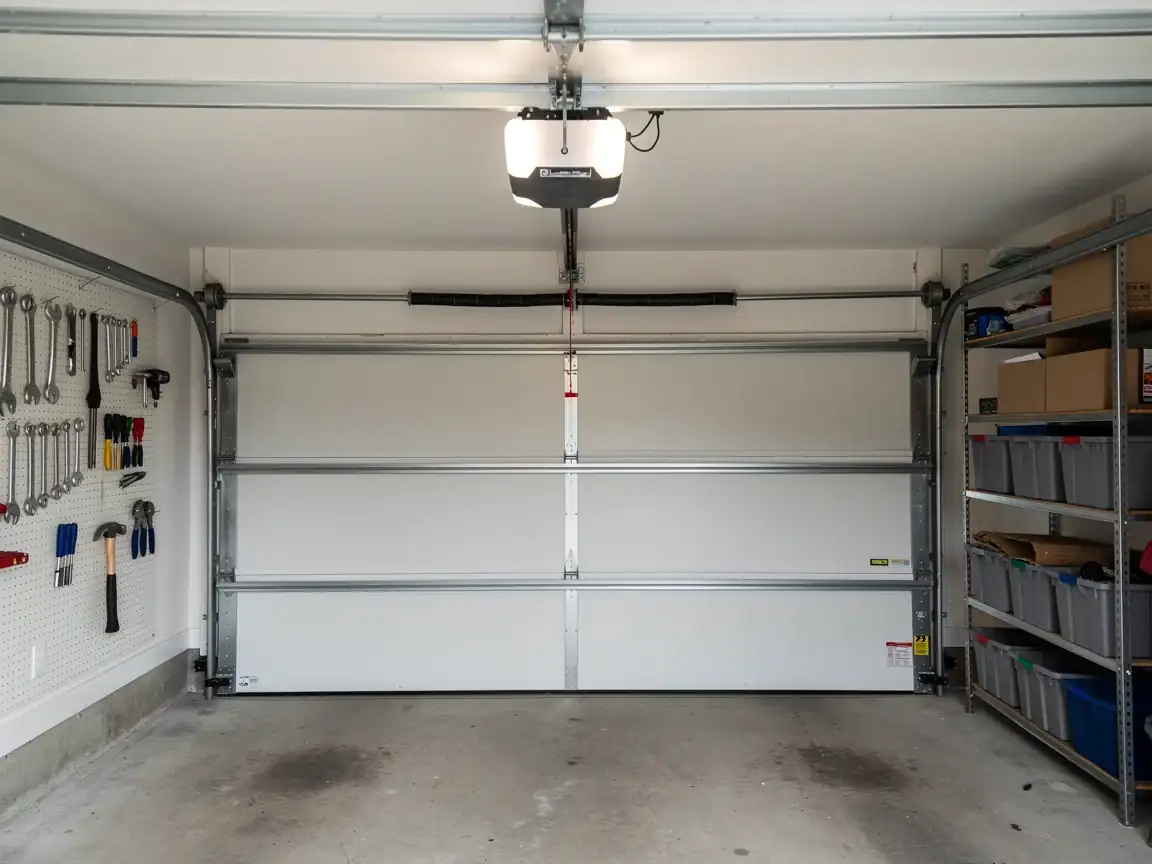
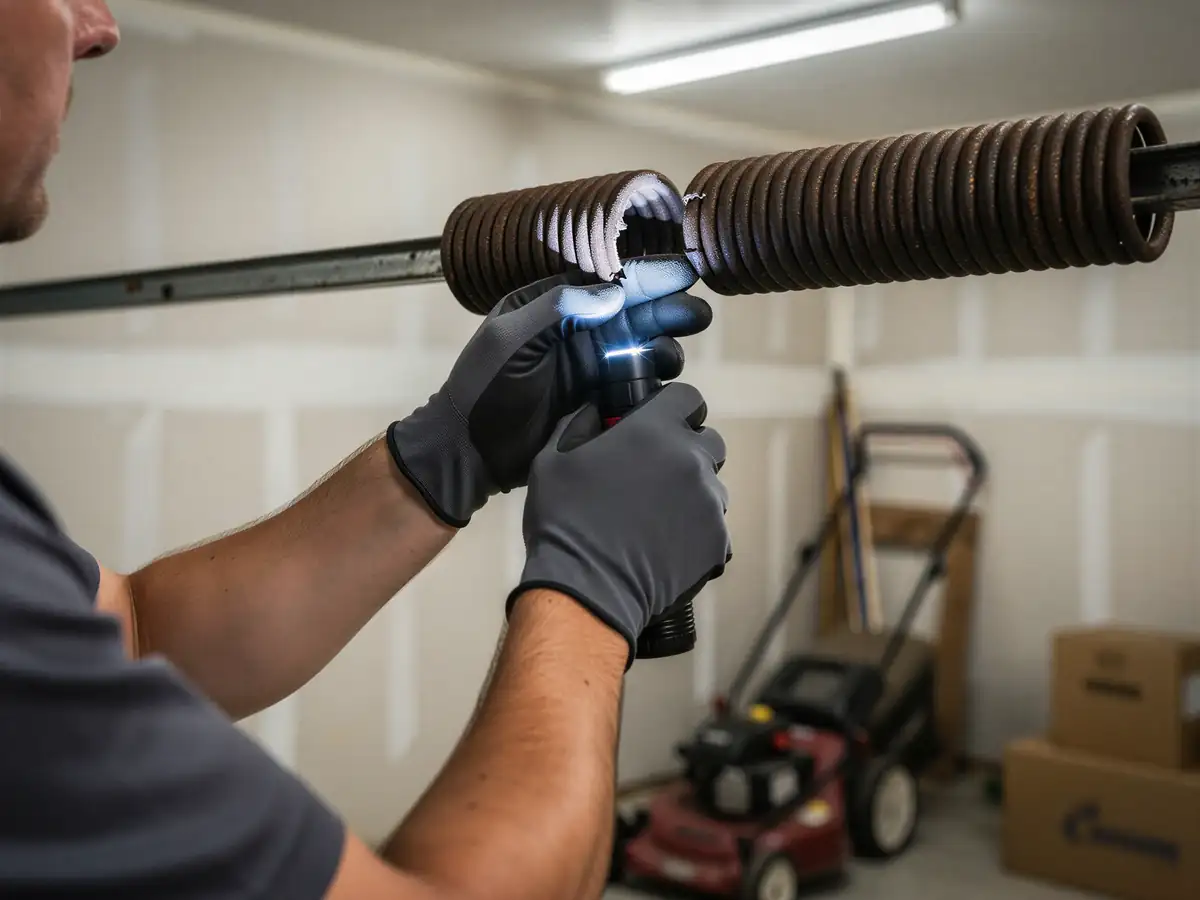
An off-track door isn't a mystery job once you've opened enough of them across this service area. Savannah's housing stock runs mostly 1964 to 2011, with a median build year around 1990, and most of that stock across the fifteen named neighborhoods we cover sits in that 1980s-90s band. That means a lot of doors with the same rollers, the same stamped steel tracks, and the same bracket hardware that was standard for that era. We're not guessing at what we'll find when we pull into a driveway - the pattern repeats from Georgetown to Richmond Hill. What changes house to house is how far the door has come off the track and whether the cable is still holding tension or has let go entirely. That's the first thing we check before anything else gets touched, because a door that's merely leaning in the track is a different job than one with a snapped cable and a panel hanging loose.
What You Are Seeing
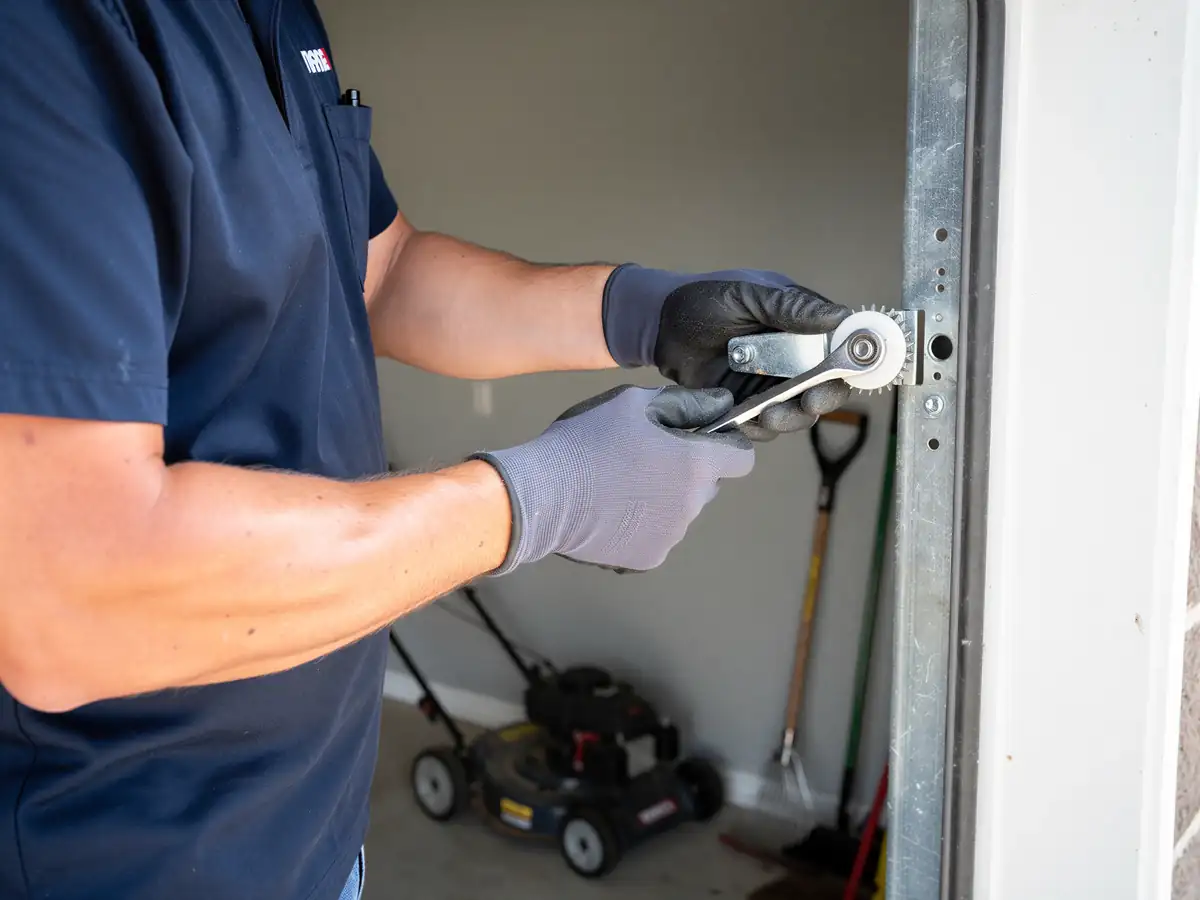
Usually it starts small: the door catches partway up, or one side hangs lower than the other when it's open. Sometimes a roller has worked its way out of the track entirely and the door is cocked at an angle, stuck half up or half down. You might hear a grinding or popping sound right before it happens, or you might just come home to a door that won't move at all because the opener senses the misalignment and refuses to run. In the worst version, a bottom roller has sheared off its stem and the panel below it has dropped out of the track frame, which puts weight on the remaining rollers that they weren't built to carry. None of these are a problem you fix by shoving the door back in its channel. That track is bent, bowed, or the bracket holding it to the jamb has pulled loose, and forcing the door risks the next roller going too.
Why This Fails Locally
Two things line up here that you don't get in every market. First, the age of the housing: a door and track system installed when a house went up in, say, 1985 has had decades to work loose at the lag screws and brackets, and a lot of that original hardware is still in service across the 1980s-90s stock that dominates this area. Second, the climate - mild most of the year with occasional freeze - means the track metal expands and contracts enough over time to shift alignment, even without the deep freeze-thaw cycles that wreck hardware up north. It's a slower failure, which is exactly why it sneaks up on people. The door works fine for years, then one humid afternoon a roller catches wrong and the whole thing jumps the rail. We also see it on doors that have had an opener retrofitted onto original 1980s-90s track - the extra force from a modern opener motor exposes weak brackets that a manual door never stressed.
How We Fix It
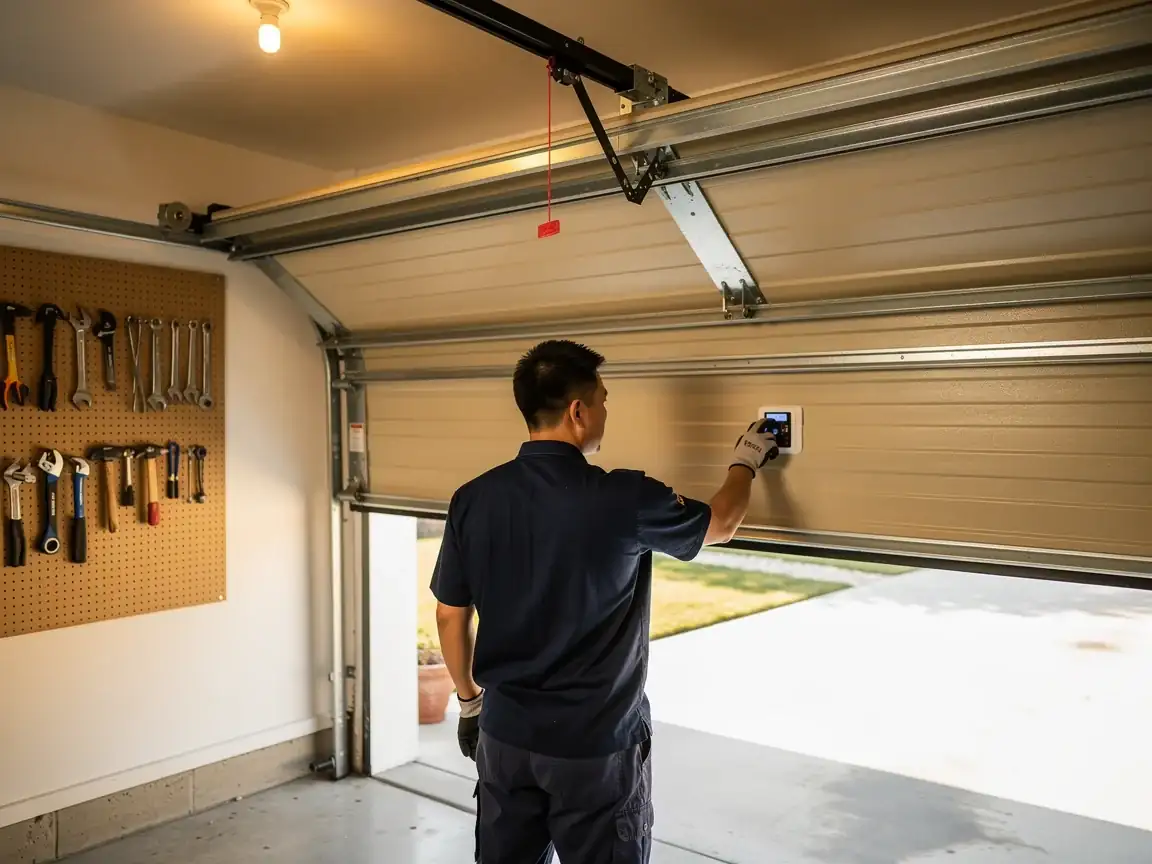
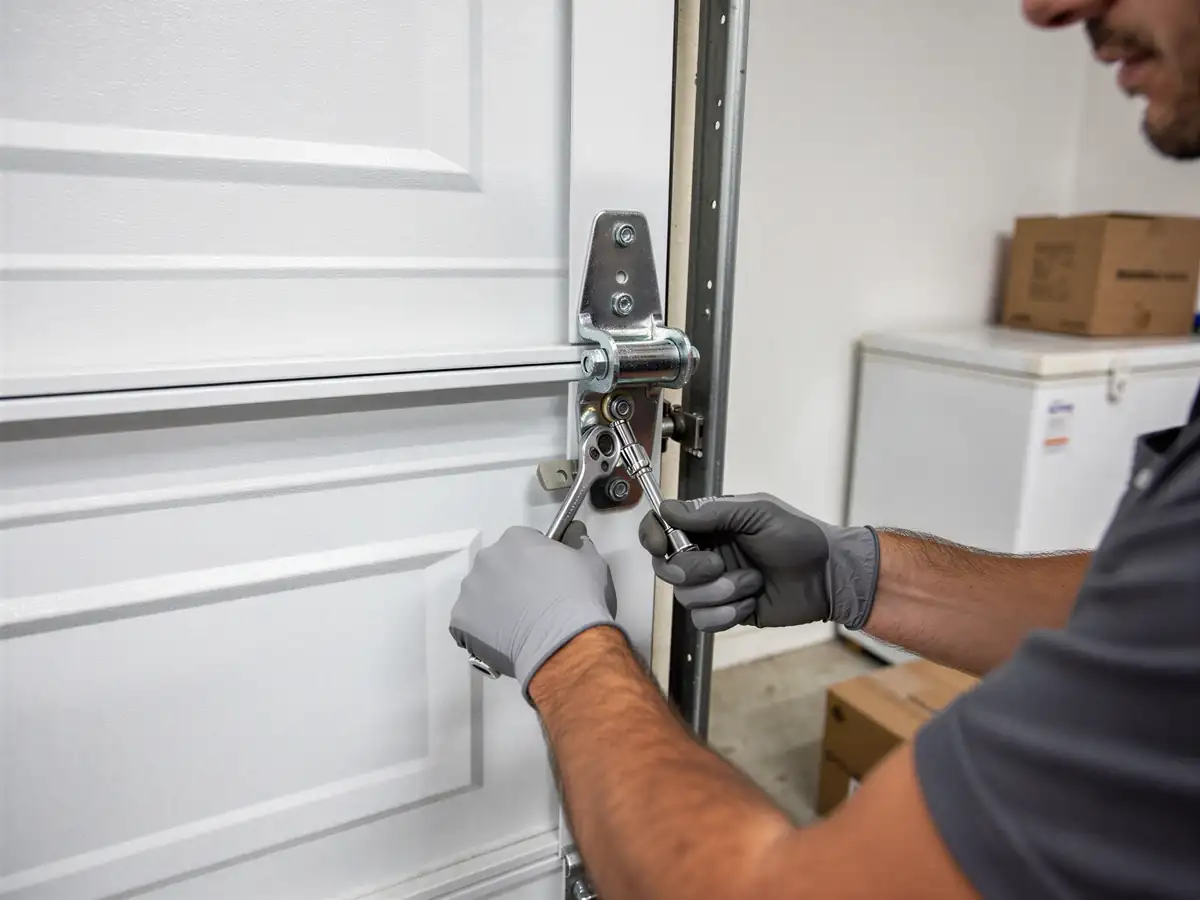
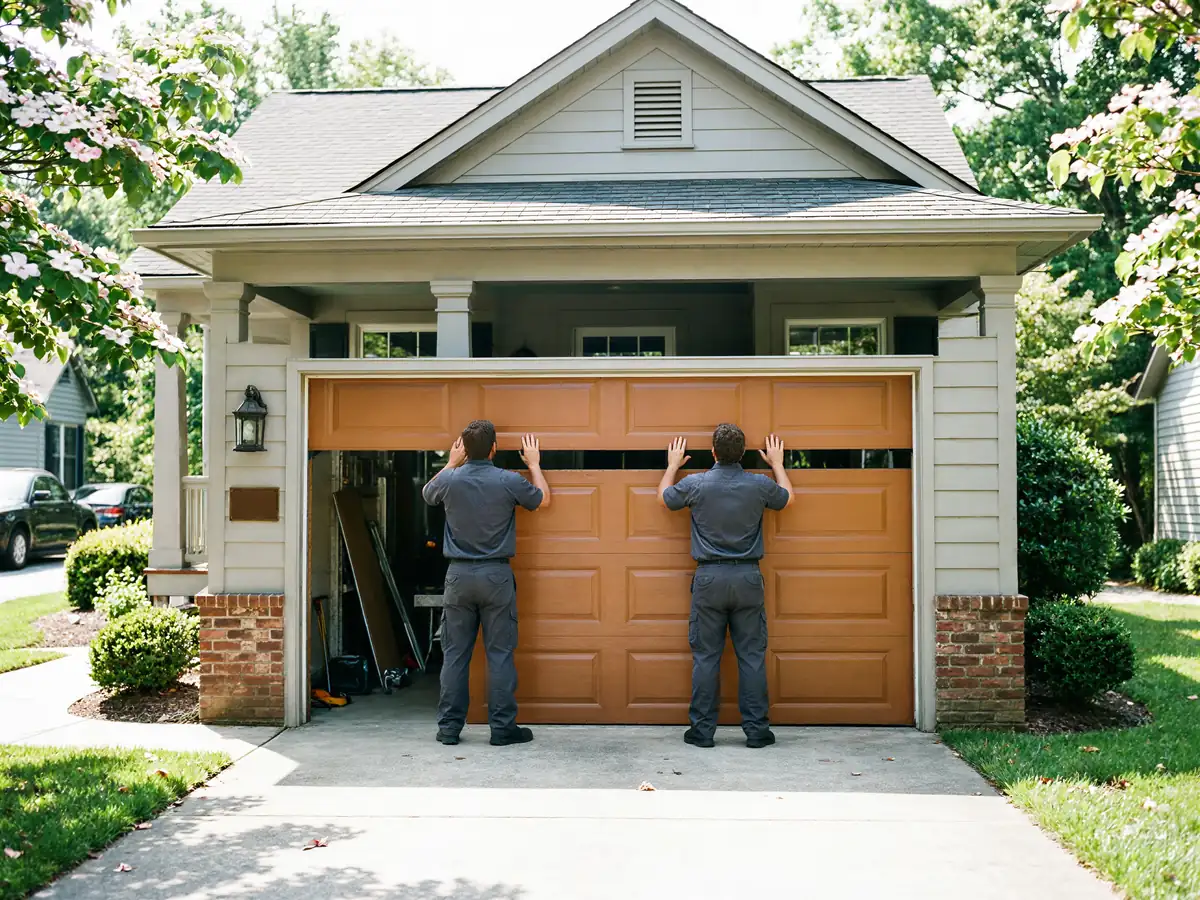
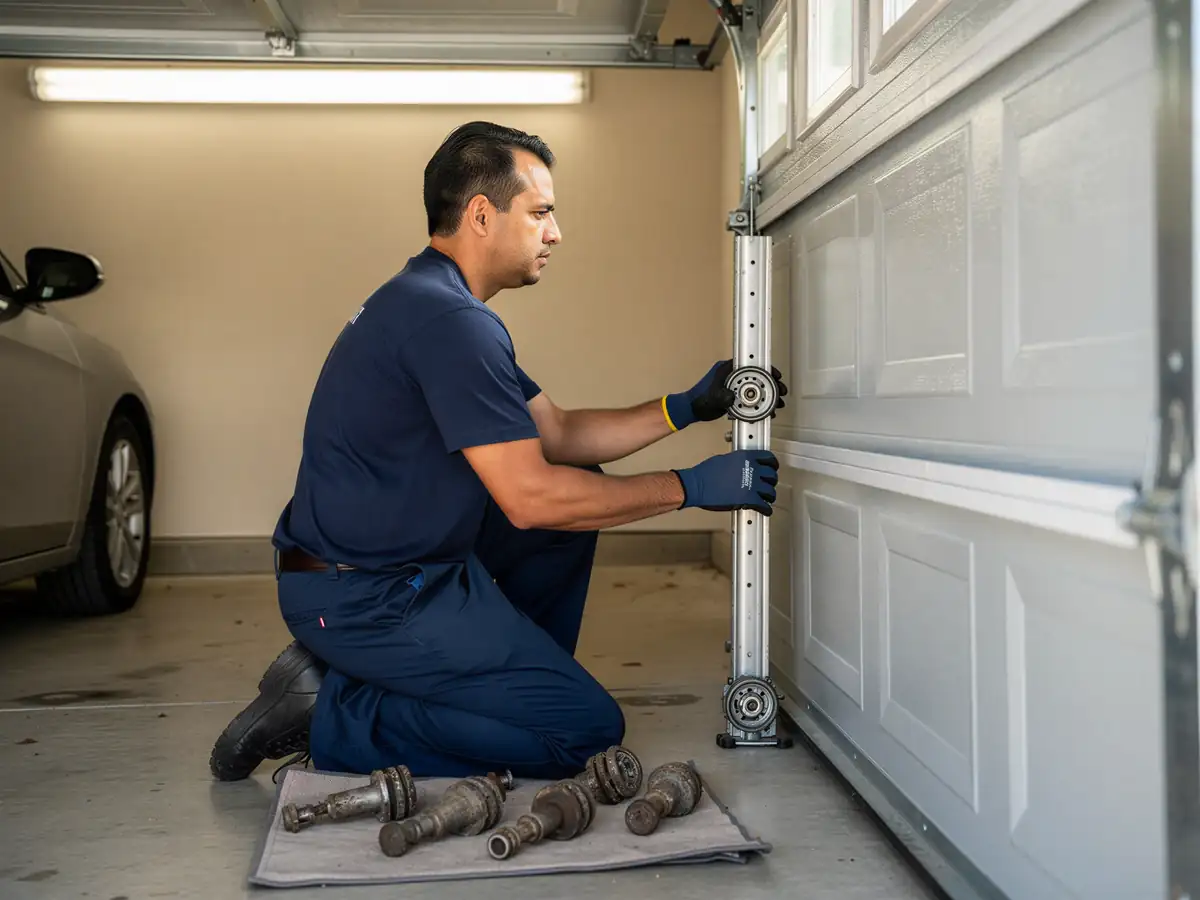
First we get the door secured so nobody's standing under a panel that could drop further - that's a five-minute job with clamps, not a repair. Then we look at the track itself: if it's just bent, we can often straighten or realign it and reset the rollers without replacing the whole run. If the track is bowed badly or the bracket has torn out of the jamb, straightening isn't worth doing - we replace that section, because a patched bracket on an already-stressed door is the kind of fix that comes back in six months. Rollers that have sheared get swapped, cables get checked for fraying since a cable that's about to go is often what let the door wander off track in the first place. One honest limit: if your track and rollers are original to a house built in the 80s or 90s, we may recommend replacing more than just the broken piece, since matching worn original hardware with new parts rarely lasts.
How it works
From “it’s stuck” to “it’s fixed”
01
Tell us what’s wrong
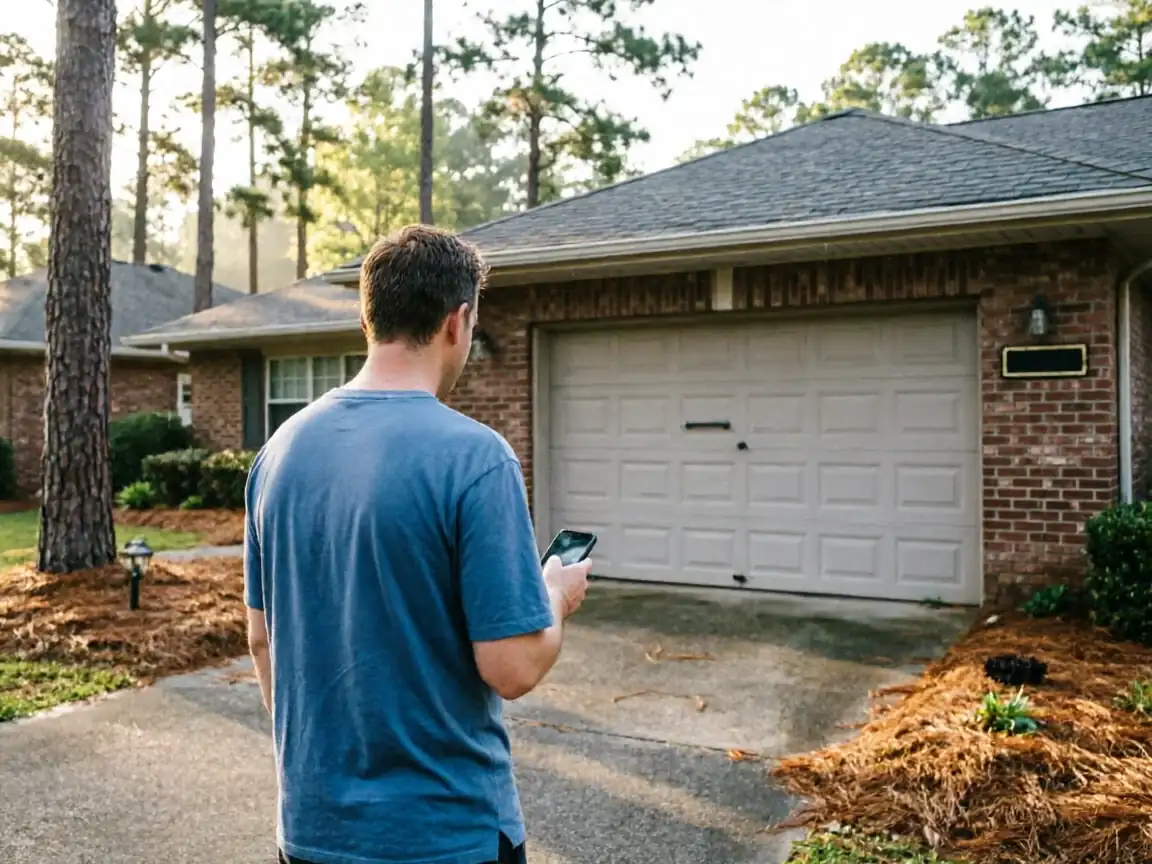
Describe the symptom - won’t open, loud bang, opener runs but the door won’t move.
02
On-site diagnosis
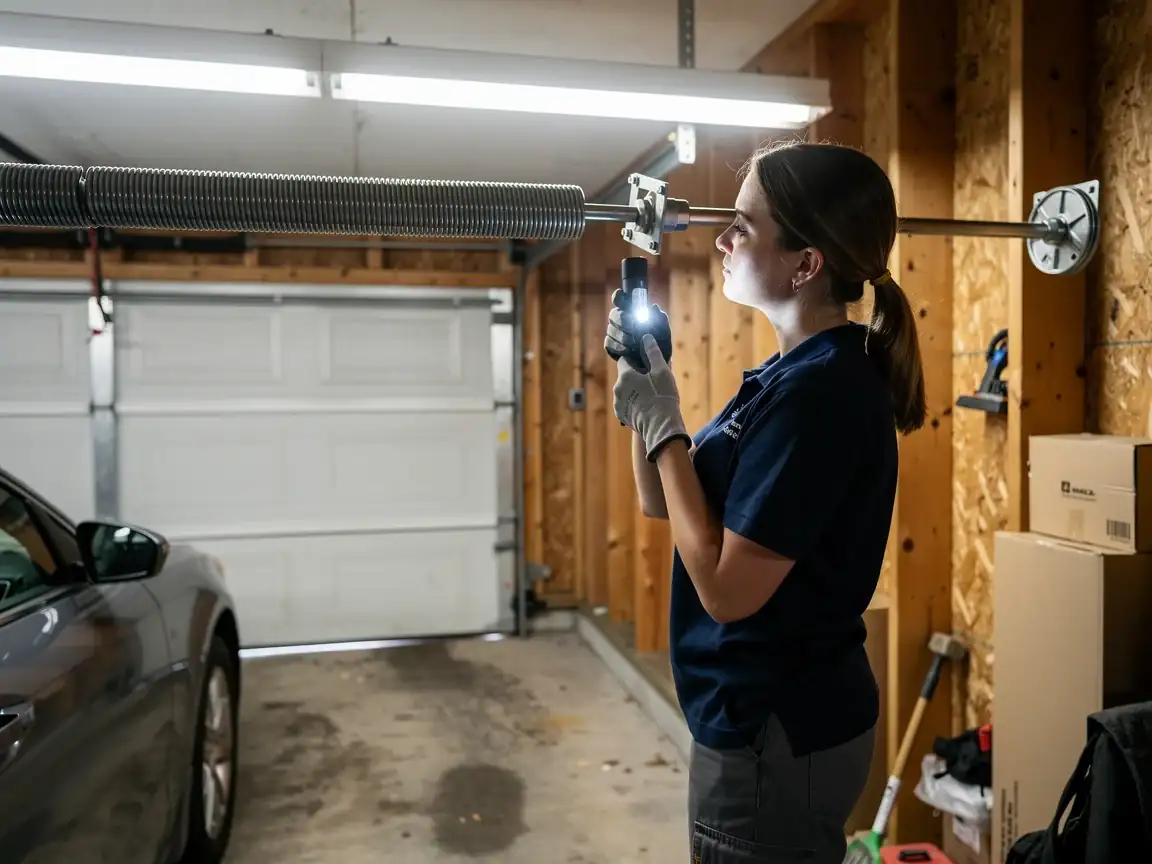
A technician tests the door under power and by hand and finds what actually failed.
03
Clear, up-front plan
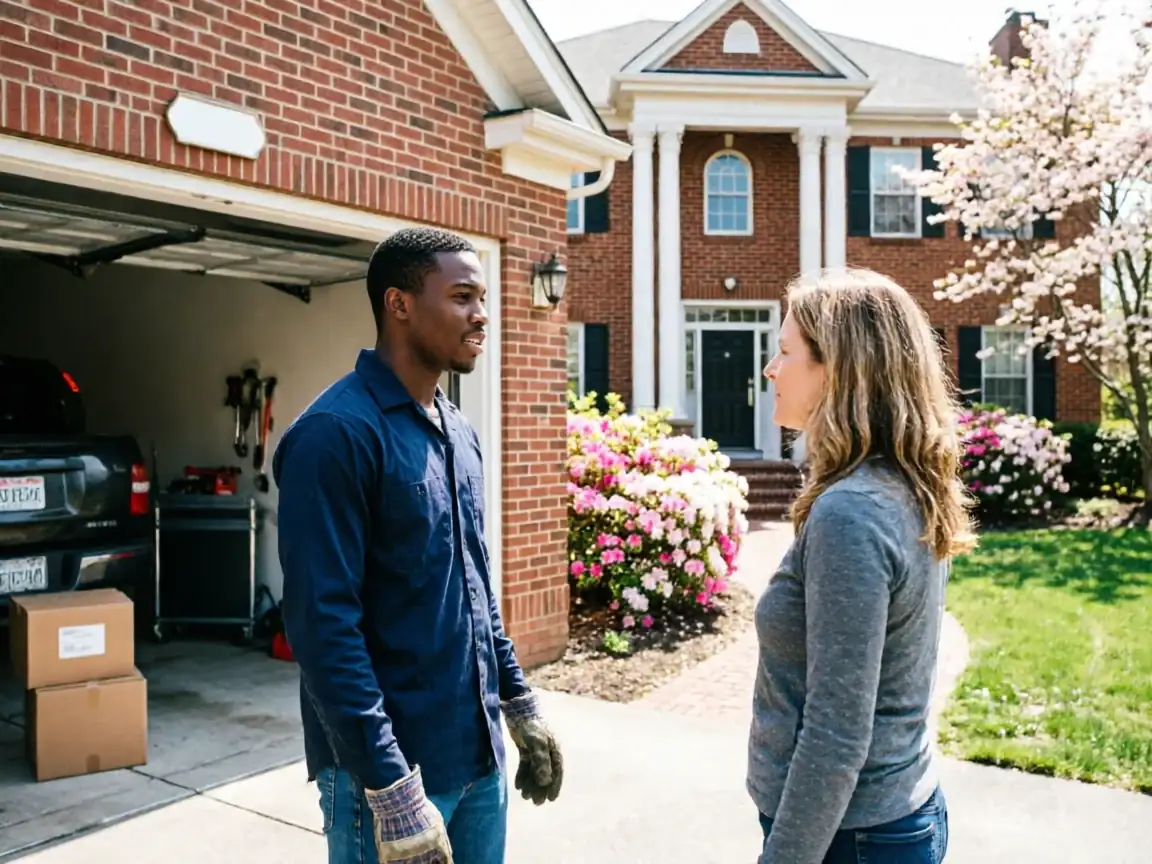
You get the fix that’s needed and what drives the cost - before any work starts.
04
Repaired & tested
The repair is done, the door is set true and tested, and the work area left clean.
Not sure which repair your door needs in Savannah, GA? Describe what it’s doing - every job starts with a diagnosis.
Why did my garage door suddenly come off the track with no warning?
It's rarely sudden - the hardware has usually been loosening for a while. In houses from the 1980s-90s stock common in this area, brackets and rollers wear slowly, and the mild climate with occasional freeze cycles adds just enough metal movement over the years to finally let a roller slip. What feels sudden is really the last step of a long process.
Can I push the door back onto the track myself?
We'd rather you didn't. A door under spring tension that's off track can drop or swing unpredictably, and forcing a roller back in without checking the bracket and cable first often damages the next roller down the line. Secure the area and call - this is a short job for someone who does it regularly.
Is it the track or the opener causing the problem?
Usually it's the track, bracket, or a roller - the opener just reacts to it by refusing to run or straining. On houses where an opener was added years after the original door went in, the added motor force can expose a bracket that was never built for it, which shows up as an off-track door, not an opener failure.
Do you repair the existing track or replace it?
Depends on what we find. A track that's just knocked out of alignment, we straighten and reset. A track that's bowed or has a torn-out bracket, we replace that section rather than patch it - patched brackets on older hardware tend to fail again within the year.
Ready to get your garage door sorted?
Tell us what it’s doing and where you are in Savannah - we’ll take it from there.