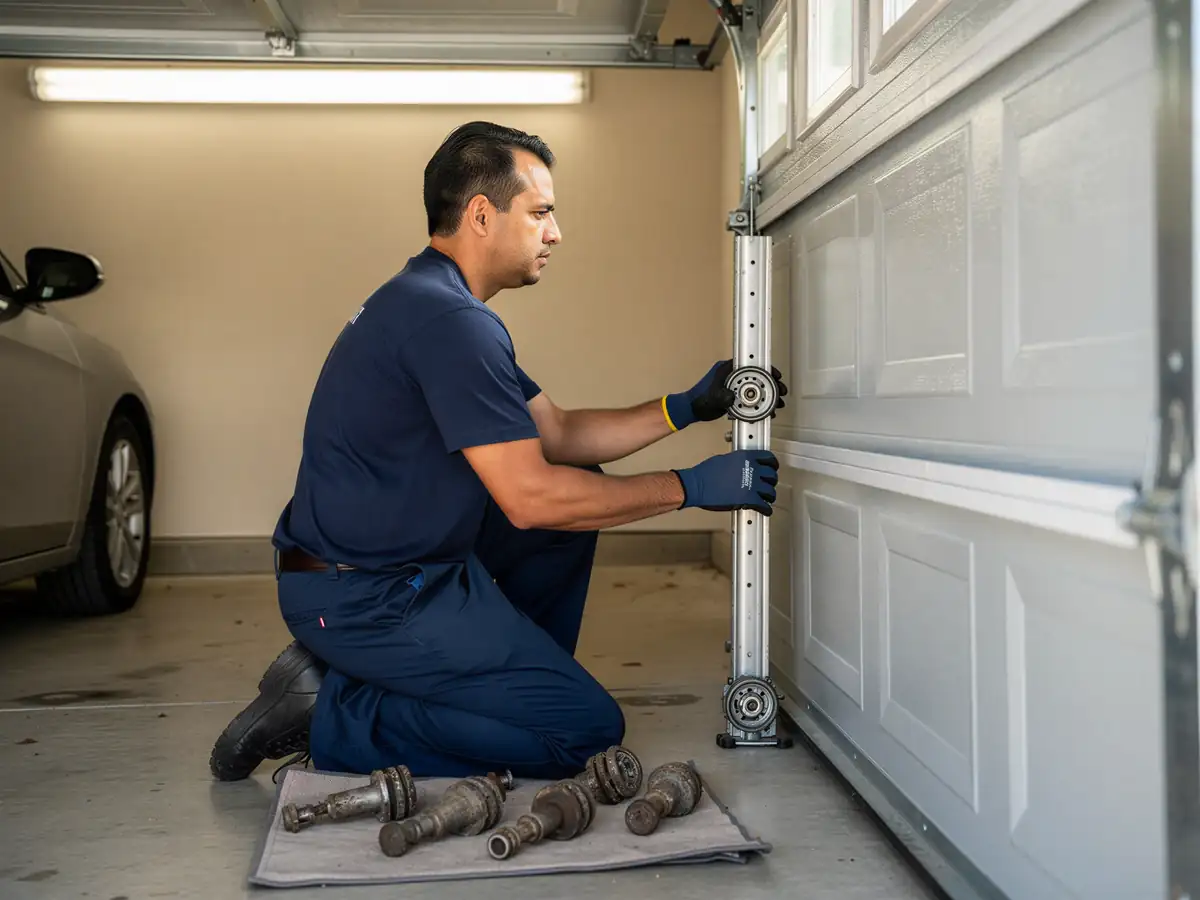
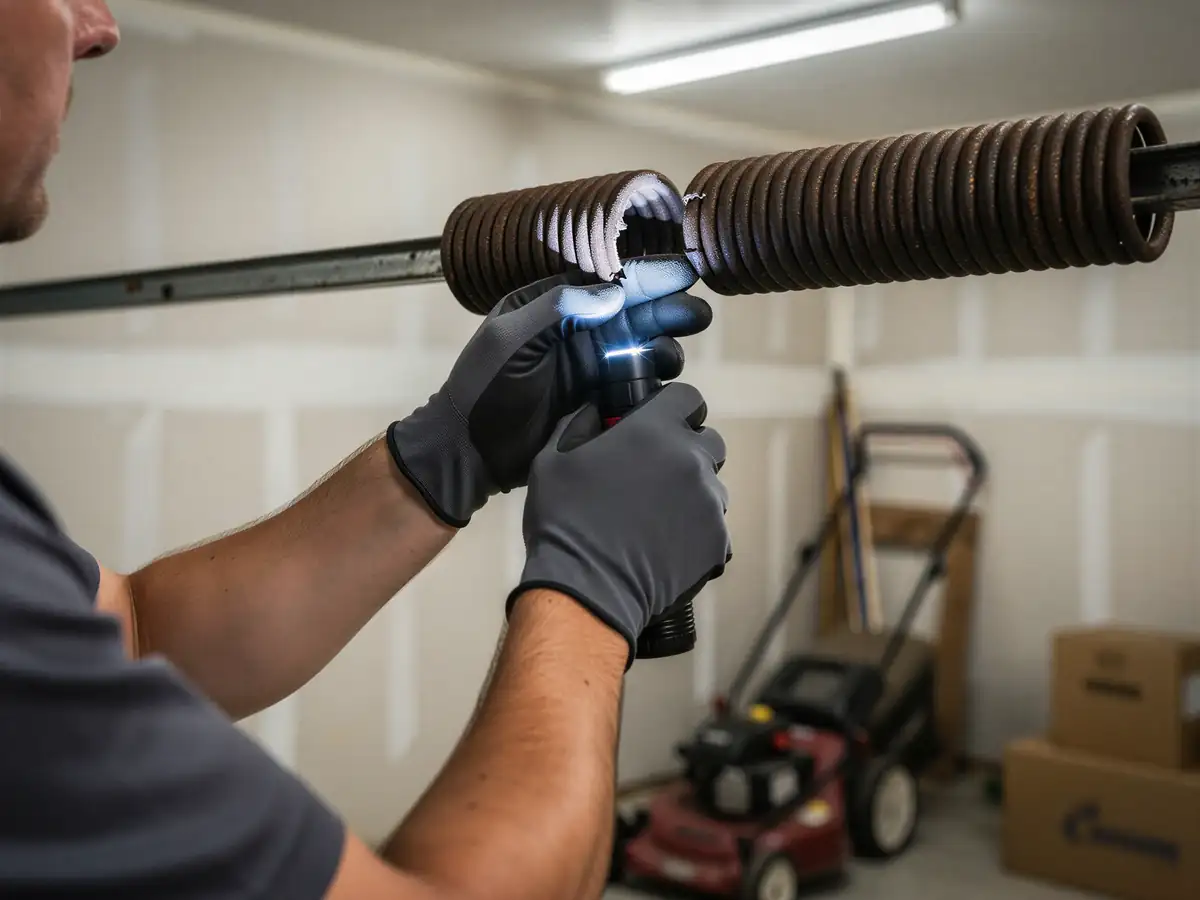
Savannah sits in a mild climate band with occasional freeze mornings, not the hard winters you'd get further north. That matters more than people think. A torsion spring doesn't care about heat the way it cares about sudden cold snaps - metal contracts, old lubricant stiffens, and a door that's worked fine all year suddenly feels heavy or sticks halfway up the track on that one cold January morning. We don't get the deep freeze that cracks nylon rollers outright, but we do get enough swing between a humid 80-degree afternoon and a 38-degree night to work on hardware that was never built for extreme cycling in the first place. If your door groans more in winter than summer, that's the seasonal pattern talking, not a sign the opener is dying. Most of what we see this time of year is lubrication and track alignment, not full replacement. The honest version: a $12 can of the right lithium grease on springs and rollers twice a year solves more of this than any service call does. We'd rather tell you that than bill you for it.
What to Look At First
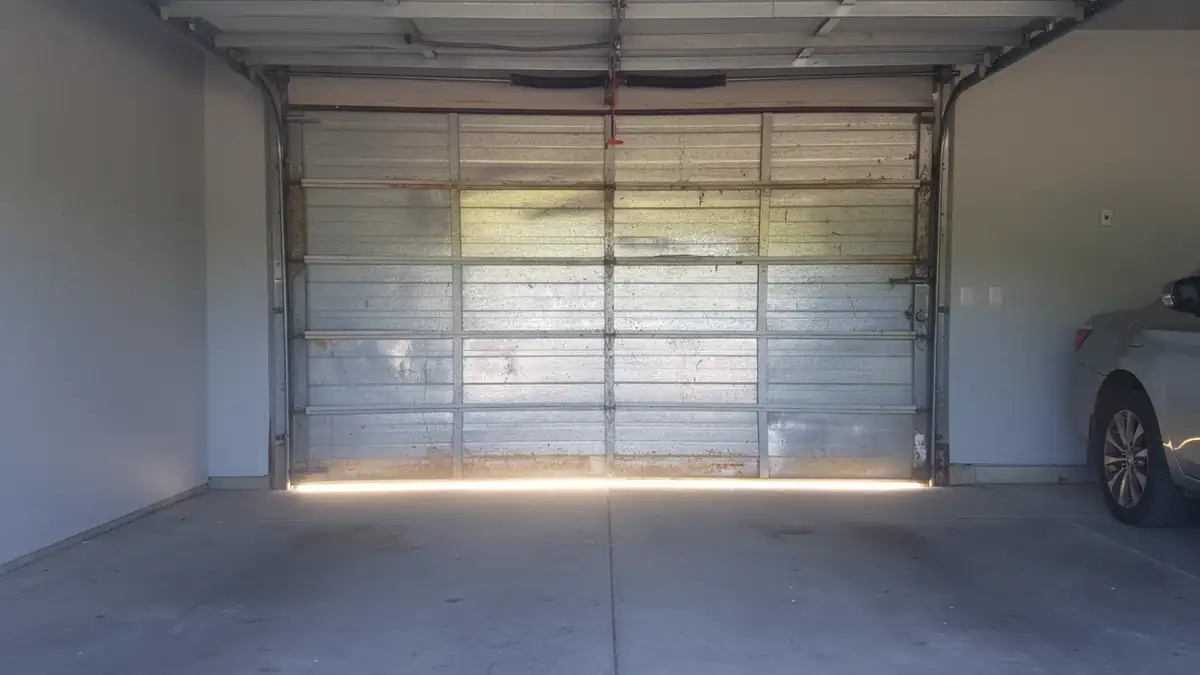
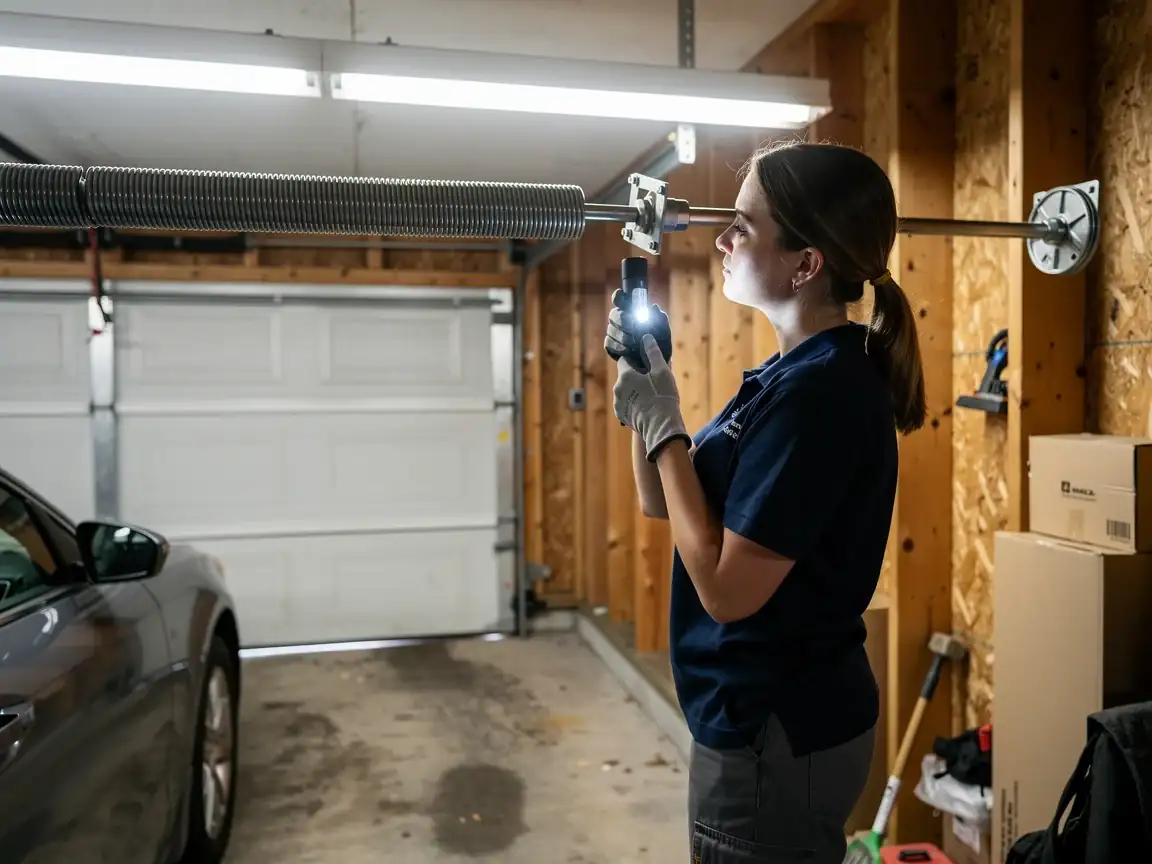
Housing stock in the service area runs 1964 through 2011, with the median build landing around 1990. That spread matters because garage door standards moved a lot in those decades - insulation requirements, spring sizing, and opener safety reversal all changed over that window. If your house falls on the earlier end, you're likely looking at doors on houses built before insulation rules, meaning a single steel skin with no thermal break, heavier to lift and louder in the track than anything built since. Fifteen named pockets across the area carry mostly 1980s and 90s stock, which puts a lot of original torsion springs well past their realistic cycle count by now - springs are rated in cycles, not years, and a 30-year-old spring on a door opened twice a day has done its work. First thing to check: the date stamp or install sticker on the spring itself if it's visible, and whether the opener has a modern safety-reversal sensor pair at the bottom of the track. Houses from the early end of that 1964 start often never got the sensors retrofitted.
How Local Conditions Play In
Distance and density both shape what we see. Georgetown, three miles out, and Garden City at five sit closer to the coastal moisture that speeds up rust on bare springs and hinges, while Montgomery, Isle of Hope, and Thunderbolt at eight and nine miles each carry their own mix of the same 1980s-90s builds. Further out - Rincon at 19 miles, Midway and Tybee Island at 20 - the stock skews a bit newer in places and older in others, so it's less predictable without seeing the actual door. What stays consistent across all of it is the mild-with-occasional-freeze pattern: nothing here is built to handle hard winter cycling, so even newer doors in Richmond Hill or Bloomingdale don't get a pass just because they're younger. Build year tells you more about spring wear than it does about neighborhood name.
The Situation
Across the area, there are roughly 45,614 households and 25,831 owner-occupied houses, with median household income around $86,500. That's a lot of doors built across a 47-year window, and it means no two service calls look quite the same - a 1960s single-skin door in one pocket, a 2005 insulated steel door with a dead opener board in another. We don't stock every panel size for every build year, and custom or oversized panels on older non-standard doors sometimes mean a lead time we can't shorten, which is the honest limit here: if your door was a custom order when the house was built, getting a matching replacement panel isn't a same-day fix. What we can say is that the age spread itself is the useful fact - knowing whether your door predates modern insulation and safety-reversal standards tells us more walking in than the neighborhood name does.
How it works
From “it’s stuck” to “it’s fixed”
01
Tell us what’s wrong
Describe the symptom - won’t open, loud bang, opener runs but the door won’t move.
02
On-site diagnosis
A technician tests the door under power and by hand and finds what actually failed.
03
Clear, up-front plan
You get the fix that’s needed and what drives the cost - before any work starts.
04
Repaired & tested
The repair is done, the door is set true and tested, and the work area left clean.
Not sure which repair your door needs in Savannah, GA? Describe what it’s doing - every job starts with a diagnosis.
How do I know if my garage door predates insulation standards
Check the door's edge thickness and weight. Single-skin steel doors from the earlier end of the 1964-2011 range feel noticeably heavier to lift by hand and often have no foam core visible if you look at a cut edge or damaged panel. If your house is near the median build year of 1990, it could go either way.
Does Savannah's climate really affect garage door springs
Yes, though not in the way a northern winter would. The mild-with-occasional-freeze pattern means hardware cycles through humid heat and the occasional cold snap rather than sustained cold, which stiffens lubricant and tightens metal unevenly rather than causing the deep-freeze cracking you'd see elsewhere.
My house is in one of the older 1980s-era neighborhoods, should I expect spring failure soon
If the spring hasn't been replaced since the house was built, it's likely well past a reasonable cycle count by now. Springs fail by cycles, not calendar years, so a daily-use door in a house from that era is a reasonable candidate for a spring check even without visible wear.
Can you get replacement panels for older custom doors
Sometimes, but not always on short notice. Custom or oversized panels ordered when an older house was built aren't something we keep in stock, and matching them can take longer than a standard repair. We'll tell you upfront if that's the situation rather than guess.
Ready to get your garage door sorted?
Tell us what it’s doing and where you are in Savannah - we’ll take it from there.